


Definition: An antibacterial mattress is a type of mattress that uses materials or technology in its internal structure to prevent the growth of bacteria, fungi, and dust mites. These mattresses prevent the humidity and heat generated during sleep from creating a breeding ground for microorganisms. Thus, instead of becoming a nest for bacteria over time, the mattress remains hygienic for a long period.
What is an antibacterial mattress? A complete guide for healthy sleep
The interior of a mattress, where an average of 7 to 9 hours are spent every night, can create a favorable environment for bacteria and dust mites despite regular cleaning. An antibacterial mattress is designed to eliminate this risk at the material level. Individuals with allergies, asthma patients, and families with young children particularly prefer these mattresses.
Table of Contents
- Scope and limits of an antibacterial mattress
- How does an antibacterial mattress work?
- Key components: What, and why are they important?
- Types of antibacterial mattresses
- Who is it suitable for and when is it necessary?
- Comparison of an antibacterial mattress with a standard mattress
- Common misconceptions
- Frequently asked questions
Scope and limits of an antibacterial mattress
The concept of an antibacterial mattress does not just cover the outer cover. A truly antibacterial mattress has a structure that slows down the growth of microbes at every point, from the inner padding material such as foam or springs to the fabric layers.
A line must be drawn here: Antibacterial properties do not make the mattress sterile. The goal is not to completely eliminate bacteria, but to reduce their reproduction rate. Surface cleaning is still necessary; however, the antibacterial structure extends the intervals between regular cleaning and protects the life of the mattress.
SlothBedding's Air Clean technology takes this approach a step further: the mattress interior is kept constantly hygienic with an ozone-based self-cleaning mechanism. This is defined as a world-first technology as of 2026.
How does an antibacterial mattress work?
The working principle of antibacterial mattresses is based on several different methods.
- Silver ion or copper particles embedded in the material disrupt bacterial cell membranes, stopping reproduction.
- Bioactive capsule technologies like Purotex remove dust mite waste and bacterial colonies from the surface.
- Ozone-based systems break down bacterial and fungal cells through an oxidative process; SlothBedding's Air Clean technology falls into this category.
- Open-cell foam structures that increase air circulation reduce moisture accumulation, making the environment inhospitable without even needing to fight bacteria directly.
The methods are not mutually exclusive. A high-quality antibacterial mattress usually employs two or more of these mechanisms simultaneously. For example, the Connect Air Clean Mattress offers both air circulation and an active cleaning system together.
Key components: What, and why are they important?
The effectiveness of an antibacterial mattress depends on multiple layers working together.
- Cover fabric: Natural fibers such as Tencel or bamboo slow down bacterial growth due to their moisture-wicking properties. These fibers also maintain heat balance.
- Padding foam: Open-cell visco or latex foams provide airflow. Closed-cell dense foams, on the other hand, retain moisture and create a disadvantage in terms of hygiene.
- Bioactive additives: Purotex technology binds bacteria and mite waste via microcapsules. These capsules are renewed during washing.
- Active cleaning mechanism: The ozone system used in Air Clean technology continuously filters the air inside the mattress. This provides an active intervention beyond passive measures.
The lack of one component can reduce the effect of the others. For example, even if the foam layer is antibacterial, if the cover retains moisture, this advantage is significantly weakened.
Types of antibacterial mattresses
There are three main categories on the market.
Passive antibacterial mattresses: These work with chemical or natural substances embedded in the fabric or foam. Mattresses with silver ion and copper additives fall into this group. They do not require maintenance, but their effectiveness may decrease over time.
Mattresses with bioactive capsule technology: Solutions like Purotex use live probiotic capsules. The capsules are activated as they are washed. These mattresses are frequently preferred for children with allergies. The Logic Kids Air Clean Mattress is one of the models with this technology.
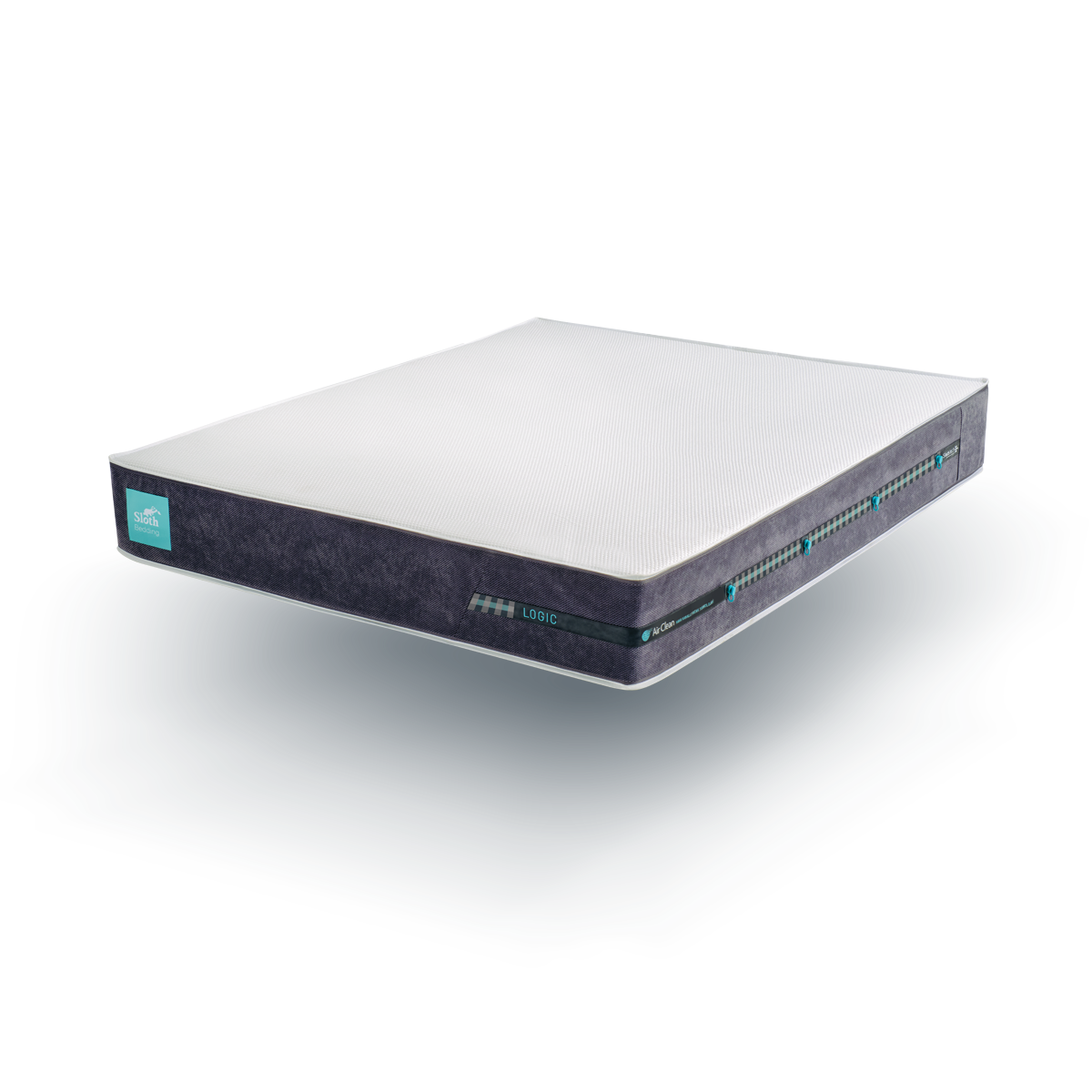
Mattresses with active cleaning systems: They actively clean the mattress interior with ozone or UV-based technologies. The SlothBedding Air Clean series is the only domestic representative of this category. The Reboot Air Clean Mattress and the Logic Air Clean Mattress are models in this series that offer different firmness options.
Who is it suitable for and when is it necessary?
An antibacterial mattress benefits everyone; however, for some users, it becomes a necessity rather than a preference.
Individuals with allergies: Dust mites are one of the most common triggers for allergic rhinitis and asthma. One gram of mattress dust can harbor approximately 100,000 to 500,000 mites. The antibacterial and anti-allergic structure significantly reduces this load.
Babies and young children: Babies, whose immune systems are still developing, are much more sensitive to bacterial and fungal exposure than adults. The Baby Air Clean Mattress collection has been designed with this need in mind.
Those who have excessive sweating problems: Night sweats accelerate moisture buildup. An antibacterial mattress breaks this cycle with moisture management and active air circulation.
Asthma patients: Fungal spores and bacterial waste inside the mattress produce respirable particles. The antibacterial structure prevents the formation of these particles.
Comparison of an antibacterial mattress with a standard mattress
| Feature | Standard mattress | Antibacterial mattress |
|---|---|---|
| Bacterial growth | Uncontrolled | Slowed down at the material level |
| Dust mites | Increases over time | Reduced with bioactive capsules or ozone |
| Moisture management | Varies by foam type | Open-cell structure and air circulation |
| Odor formation | Common | Delayed with active cleaning |
| Cover material | Usually polyester | Tencel, bamboo, or antibacterial weave |
| Maintenance requirement | Required frequently | Sufficient at longer intervals |
| Allergic reaction risk | Higher | Significantly lower |
Throughout its life cycle, a standard mattress can accumulate dust, bacteria, and moisture weighing up to forty percent of its own weight. Antibacterial mattresses limit this accumulation and also extend the service life of the mattress.
Common misconceptions
"Washing the cover is enough." Incorrect. The vast majority of bacteria and dust mites live in the foam layer. Cleaning the cover fixes the surface but does not clean the internal structure.
"Every mattress labeled antibacterial is of the same quality." No. A surface coating applied to the cover does not provide the same result as a solution processed into the inner material or supported by an active system. It is necessary to request the technology certificate and test report.
"An antibacterial mattress completely cures allergies." Allergy treatment is provided by a physician, not a mattress. An antibacterial mattress reduces exposure to triggers; this alleviates symptoms but does not replace medical treatment.
"It is not necessary for children." Quite the opposite. Children between the ages of 0 and 6 spend 12 to 16 hours of their day sleeping. The hygiene of the surface where this time is spent is much more decisive compared to adults.
Frequently asked questions
Is an antibacterial mattress the same thing as an anti-allergic mattress?
No, they are not the same thing. An anti-allergic mattress creates a barrier against mites and pollen; an antibacterial mattress slows down bacterial and fungal growth. High-quality models have both features. When reviewing anti-allergic mattress models, it is necessary to check if both features are present.
How long does the Air Clean technology remain active?
The SlothBedding Air Clean system maintains the ozone cycle as long as the mattress is in use. The technology does not lose its effectiveness with washing or wear like passive additives. However, the periodic maintenance of the device should be performed according to the manufacturer's instructions.
Is an antibacterial mattress safe for babies?
Yes. Models designed for babies use natural antibacterial materials that do not contain chemical additives and use certified foam. Models in the Baby Air Clean Mattress collection are produced to meet these safety standards.
How often should an antibacterial mattress be cleaned?
The cover can be washed every 2 to 3 months according to the manufacturer's instructions. If there is an active cleaning system for the interior structure, this period is extended. The monthly airing and quarterly cover cleaning recommended for a standard mattress can be applied at longer intervals for an antibacterial mattress.
How much does someone with a dust allergy benefit from an antibacterial mattress?
Dust mite allergy is one of the most common indoor allergies. A mattress with an antibacterial and anti-allergic structure reduces the mite population and waste load significantly, decreasing nighttime symptoms. This effect directly influences the sleep quality of individuals with allergic rhinitis and asthma.
Is an antibacterial mattress more expensive than a standard mattress?
The price difference in the entry segment is low. Models that include active cleaning technology or multi-layer bioactive systems carry a higher price. The SlothBedding Air Clean series is offered with prices starting from 38,538 TL. When considering the reduced maintenance costs and extended mattress life in the long run, most of this difference is offset.
For those looking for an antibacterial mattress, the Air Clean antibacterial mattress models page is the direct reference point for technical specifications and price comparison.

Share:
2026 Best Orthopedic Pillow Brands: 6 Perspectives
Mattress Firmness Guide for Back Pain | SlothBedding