


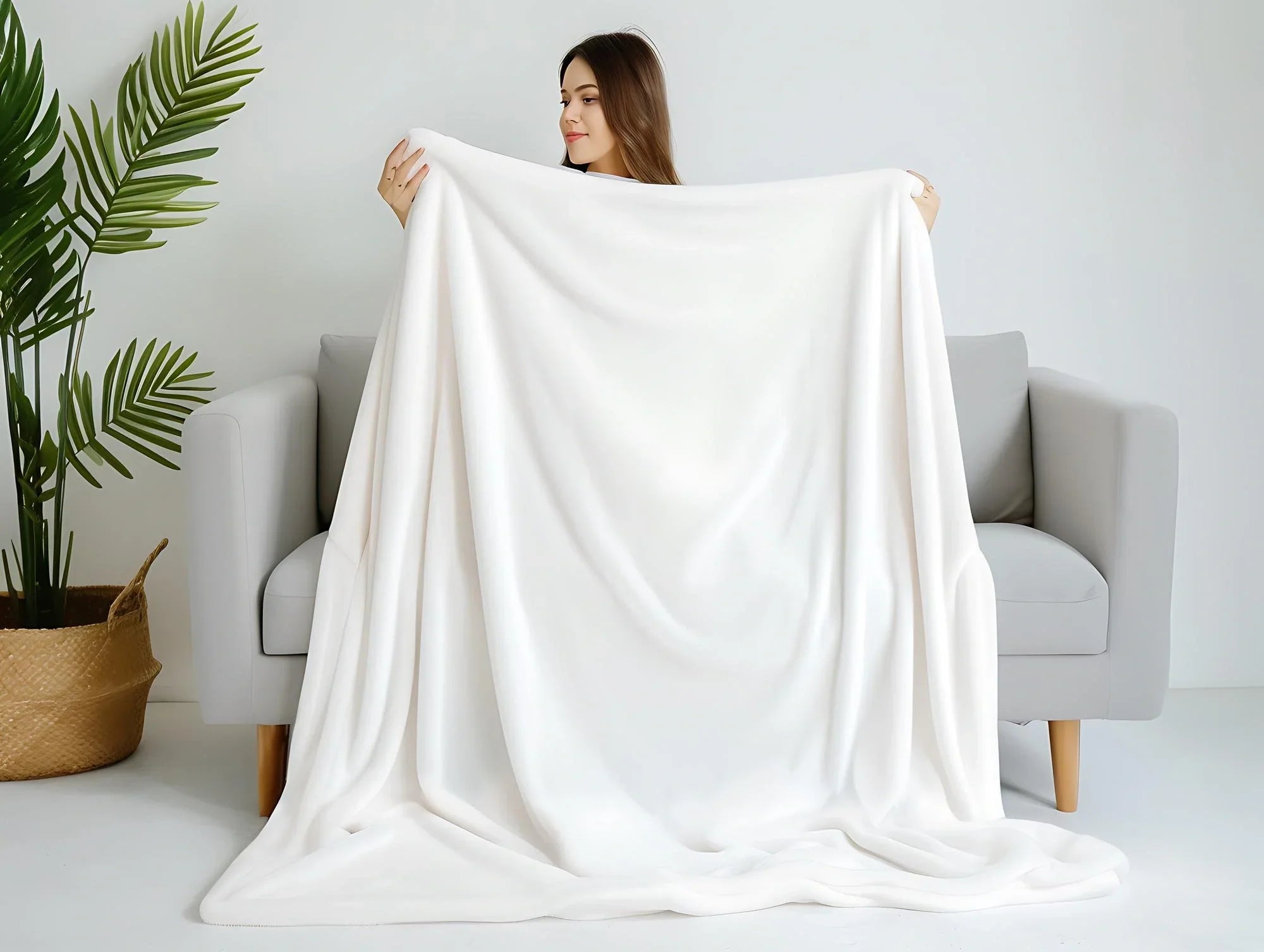
Blankets are essential items in our homes as they provide a comfortable sleeping experience and a warm environment. However, proper drying after washing is very important to preserve the blanket's texture, shape, and hygiene. Incorrect drying can cause the blanket to shrink, stiffen, or lose its structure. For this reason, the question "How to dry a blanket?" is frequently researched by users.
In this article, we cover blanket drying methods, which programs should be chosen in a tumble dryer, drying tips according to fabric type, and common mistakes in detail.
Can You Put a Blanket in the Dryer?
Whether blankets can be put in a tumble dryer is one of the most curious topics. It should be remembered that not every blanket is suitable for a tumble dryer. The most important criterion in determining this is the type of fabric the blanket is made of.
Dryer Suitability According to Fabric Type
-
Cotton Blankets:
Thanks to their natural structure, they are generally suitable for machine drying. However, drying at medium heat instead of high temperatures helps to preserve the fiber structure. -
Wool Blankets:
Wool is a material that is quickly damaged by high heat. It can shrink, stiffen, or felt in a tumble dryer. Therefore, natural air drying should be preferred. -
Fleece Blankets:
Due to their synthetic structure, they can be dried in the machine at low heat. However, care should be taken against the formation of static electricity. -
Acrylic and Microfiber Blankets:
They can be tumble dried on low heat and delicate cycles. High heat can cause the fabric to deteriorate.
Note: Be sure to read the blanket's care label. If it has a “Tumble Dry” symbol on it, it can be used in a tumble dryer.
Which Program Should a Blanket Be Dried On in the Dryer?
The drying program for blankets should be determined according to the fabric type and the thickness of the product. If the appropriate program is not selected, the blanket may over-dry, stiffen, or become damaged.
Recommended Drying Programs
-
Delicate / Gentle / Low Heat Program:
Ideal for delicate fabrics such as fleece, acrylic, microfiber, and wool. Since low heat is used, it preserves the structure of the fabric. -
Cotton / Normal Dry Program:
Suitable for cotton and thick blankets. The drying time is longer compared to other programs. -
Time Dry:
Especially suitable for those who want to set the time according to the thickness of the blanket. Low heat should be preferred. -
Air Fluff / No Heat:
Provides refreshment to the blanket without using heat. No drying process is performed, but light moisture can be removed.
Tip: Adding a few clean tennis balls or dryer balls while drying your blanket ensures that the blanket dries homogeneously and helps it remain soft.
How to Dry a Blanket Naturally?
In cases where a tumble dryer cannot be used or is not desired, drying a blanket by natural means is the safest method.
Outdoor Blanket Drying
Drying a blanket using natural methods saves energy and helps protect the fabric's structure. Especially for delicate blankets that are not suitable for a tumble dryer, outdoor drying is an ideal option.
Choosing the Right Drying Area
The most important factor when drying a blanket outdoors is determining the right drying area. A breezy, well-ventilated, and preferably shaded area that does not receive direct sunlight should be chosen. This way, the blanket dries both quickly and without being damaged.
How Should a Blanket Be Hung?
A blanket should be hung properly on a wide clothesline or laid out on a large surface to dry. Hanging it from a single point can cause the fabric to stretch or lose its shape.
Laying it out flat to dry ensures both more even drying and prevents the blanket from becoming heavy and losing its form.
Protection from Sunlight
Fading may occur in blankets exposed to direct sunlight for a long time, especially in dark-colored ones. Drying in a shaded area or during times when the light is softer, such as morning or evening sun, reduces this risk.
Drying by Turning Inside Out
It is important to turn the blanket over at certain intervals so that both sides dry evenly. This process also prevents moisture from remaining inside and the formation of bad odors.
Indoor Blanket Drying
When weather conditions are not suitable or in situations where there is no opportunity to dry outside in apartment living, the indoor blanket drying method comes into play. However, this method must be applied more carefully because thick blankets dry slowly indoors and can cause problems such as moisture accumulation.
Method of Laying and Using Racks
When drying a blanket indoors, it is important to spread it out properly on a large surface without folding it. Large areas such as a clothes drying rack, a table, or a chair with a backrest can be used. The blanket should be spread as widely as possible on the rack or drying stand; this increases air circulation and shortens the drying time.
Ventilation of the Room
The area where drying is done must be well-ventilated. Opening a window helps dissipate moisture by ensuring air circulation. If possible, this process can be supported by using a fan or an air purifier.
Extra Precaution for Thick Blankets
If the blanket is very thick, the drying time may take several days. Therefore, to prevent bad odor and bacteria formation, the blanket should be turned at certain intervals and the folds should be checked.
Also, laying a dry towel underneath to absorb moisture can be effective.
Supporting with a Dehumidifier
If you frequently dry blankets indoors, using a dehumidifier provides a great advantage. These devices allow for faster and healthier drying by reducing ambient humidity.
Things to Consider When Drying a Blanket
The blanket drying process is not just about putting it in the machine and taking it out. Incorrect practices can cause the blanket's structure to deteriorate, shorten its lifespan, and lead to hygiene problems. For this reason, the following points must be strictly observed:
1. Label Instructions Must Be Followed
Different fabrics and filling materials are used in the production of each blanket. Therefore, before starting the washing and drying processes, the care instructions on the product label must be read.
Symbols and explanations such as “Tumble Dry”, “Low Heat”, and “Do Not Dry Clean” appear on the label. Failure to follow these instructions may cause the blanket to shrink, be damaged, or lose its structure.
Tip: If the label has faded over time, you can find detailed care information with the product code on the manufacturer's website.
2. Avoid Excessive Spinning and High Speed
Spinning the blanket at high speed in the washing machine can cause the fibers to break, the fabric to deteriorate, and deformation. This situation causes permanent damage, especially in wool and delicately textured blankets.
If spinning is to be done, a low-speed setting should be preferred, or gently removing excess water by hand is a safer method.
3. Ensure Complete Drying
The blanket remaining damp can lead to unwanted results. Problems such as bad odor, mold formation, bacterial accumulation, and unhealthy use become inevitable.
After the drying process is completed, the center, folds, and edges of the blanket must be checked. Thick blankets have a higher risk of inner layers remaining damp. Therefore, it is recommended to ventilate it for a while after the drying process.
4. Do Not Fold Immediately After Drying, Ventilate It
Folding the blanket immediately after it is completely dry can cause the moisture inside to become trapped and the blanket to remain airless. This reduces its freshness and softness.
Leaving the blanket spread out in an airy environment for a few hours after drying ensures both that any remaining moisture is completely removed and helps it acquire a pleasant scent.
5. Keep Away from Excessive Heat
Drying at high heat in a tumble dryer is risky, especially for synthetic and wool blankets. These fabrics can shrink, stiffen, or melt at high heat. Always choose low or medium heat, and pay attention to the machine's “high heat” warnings while drying the blanket.
Frequently Asked Questions (FAQ) About Blanket Drying
Does a blanket shrink when put in the dryer?
If the appropriate program is not used or high heat is preferred, especially wool blankets may shrink. Cotton and synthetic blankets generally do not shrink when dried with the correct program.
How many minutes does it take to dry a blanket in the dryer?
This time depends on the thickness of the blanket and the drying program. Thin fleece blankets dry in 30–40 minutes, while thick cotton blankets can take 60–90 minutes.
Can a quilt and a blanket be dried together?
No. If a quilt and a blanket are dried together, the machine's balance may be disrupted, and both may not dry completely. Drying them separately is a healthier method.
The blanket stiffened after drying, what can I do?
Re-moistening stiffened blankets briefly and drying them in the ventilation program at low heat can help soften them. Additionally, natural softeners (such as vinegar) can be used during washing.
What should be done before putting the blanket in the dryer?
First, excess water should be removed by gently squeezing, then the label should be checked and it should be placed in the machine on the appropriate program. It is recommended to use a dryer ball or a clean tennis ball.

Share:
Which cycle should towels be washed on?
How to Wash a Blanket?