


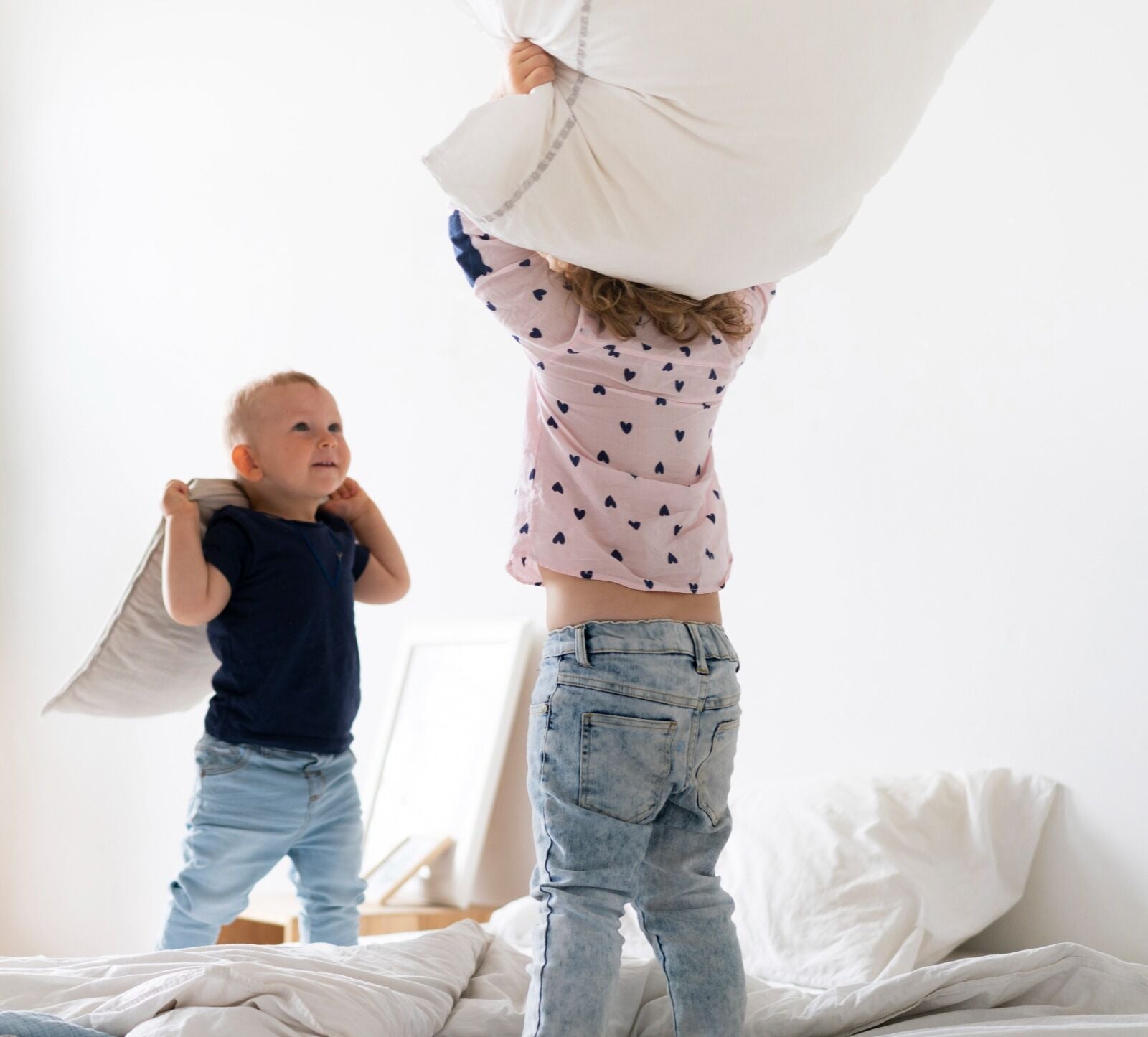
Providing a hygienic sleeping environment for children is of great importance for their health. Regularly cleaning mattresses prevents the accumulation of bacteria and allergens while also contributing to the longevity of the mattress. Here, we will cover cleaning and maintenance methods for children's mattresses.
The Impact of Regular Cleaning on a Child's Health
Regular mattress cleaning is a factor that directly affects a child's health. A mattress that is clean and free of allergens ensures your child sleeps better.
Reducing Allergens
Regularly cleaning dust mites and other allergens from the mattress reduces the risk of respiratory diseases.
-
Vacuuming the mattress once a week prevents dust mites from multiplying.
-
Washing mattress covers at high temperatures prevents the accumulation of dust and allergens.
-
Regularly airing out the room reduces humidity and prevents the formation of dust mites.
Preventing Illness
A clean mattress prevents the growth of bacteria and provides protection against illnesses.
-
Wash bedspreads and sheets with hot water to ensure germs are killed.
-
Clean the mattress regularly with antibacterial cleaning products.
-
Prevent the spread of bacteria by cleaning more frequently during periods of illness.
Better Sleep Quality
A hygienic mattress allows your child to enjoy comfortable and uninterrupted sleep.
-
Change mattress covers and sheets regularly.
-
Keep the mattress clean by using waterproof mattress protectors.
-
Provide fresh airflow by ventilating the room and mattress, which improves sleep quality.
Ways to Ensure a Hygienic Mattress Environment
A hygienic mattress environment can be achieved through regular cleaning and maintenance. A clean mattress allows your child to sleep in a healthier environment and extends the life of the mattress.
Using a Mattress Cover
A mattress cover protects the mattress from external factors and ensures it remains hygienic for longer.
-
Protect the mattress fabric from stains and spills by using waterproof mattress covers.
-
Ensure the mattress cover stays hygienic by washing it once a week.
-
Prevent allergic reactions in children by opting for hypoallergenic covers.
Regular Washing
Regularly washing bedspreads and sheets prevents the growth of bacteria.
-
Wash bed sheets at high temperatures at least once a week.
-
Make the cleaning process easier by using washable mattress protectors.
-
Prevent the accumulation of dust and dirt by washing extra blankets regularly during the winter months.
Room Ventilation
In addition to mattress hygiene, regular ventilation of the room is also important. Ventilate the room every day to prevent moisture and mold formation.
-
Ensure fresh airflow by ventilating the room for at least 10-15 minutes a day.
-
Prevent the multiplication of dust mites by keeping humidity levels low.
-
Let sunlight into the room as it serves as a natural disinfectant.
Step-by-Step Methods for Cleaning a Child's Mattress
Following specific steps when cleaning a child's mattress ensures it is deep-cleaned. These methods help keep the mattress hygienic and simplify the cleaning process.
Using a Vacuum Cleaner
Vacuuming the mattress surface once a week prevents the accumulation of dust and mites.
-
Change your vacuum nozzle to deeply clean mattress corners and seams.
-
Reduce dust buildup by vacuuming the edges of the mattress as well as the surface.
-
For deep cleaning, use the vacuum on a soft setting to clean without damaging the mattress fabric.
Stain Removal
Remove stains on the mattress surface immediately using natural cleaners. Prevent stains from becoming permanent.
-
Gently clean stains with a mixture of baking soda and water.
-
Ensure the mattress is completely dry after stain removal.
-
Avoid using harsh chemicals to remove stains, as this may damage the mattress fabric.
Deep Cleaning
Steam cleaners are an effective method for deep-cleaning a mattress.
-
Use a steam cleaner to eliminate bacteria and germs on the mattress.
-
After steam cleaning, dry out all moisture residue by ventilating the mattress well.
-
Keep the mattress hygienic by performing a deep clean monthly.
Mattress Maintenance with Natural and Chemical Cleaners
It is important which cleaners are used during mattress cleaning. Maintenance performed with the right cleaners both extends the life of the mattress and protects your child's health.
Natural Cleaners
Natural cleaners like baking soda and vinegar clean the mattress effectively without leaving chemical residues.
-
Baking soda can be sprinkled on the mattress and left for a while to neutralize bad odors.
-
Clean light stains naturally with a mixture of vinegar and water.
-
Keep the mattress free of chemical residues by using natural cleaners.
Chemical Cleaners
If you are going to use chemical cleaners for mattress cleaning, choose hypoallergenic products that are harmless to children.
-
Read the labels of chemical cleaners and choose those that are child-friendly and hypoallergenic.
-
If you use a chemical cleaner, ventilate the area well until the mattress is completely dry.
-
Prevent damage to the mattress fabric by avoiding abrasive or harsh chemicals.
Steam Cleaning
If you do not want to use chemicals for deep cleaning, steam cleaners offer a natural solution.
-
Steam eliminates germs and bacteria on the mattress with high heat.
-
After steam cleaning, ventilate the mattress well to ensure moisture is completely dried.
-
Choose steam cleaners as an effective way to disinfect the mattress without leaving chemical residues.
How Often Should Mattress Protectors Be Changed?
Mattress protectors provide important protection to ensure mattresses stay clean and last a long time. However, mattress protectors also need to be changed following a certain maintenance and cleaning routine.
-
Weekly washing: Washing mattress protectors along with sheets once a week ensures a hygienic mattress environment.
-
Immediate washing when stains occur: If liquid is spilled on the protector or a stain forms, it is recommended to wash it immediately.
-
Seasonal change: Changing mattress protectors seasonally prevents wear and tear from excessive use.
-
Signs of wear: If the mattress protector shows signs of holes, fraying, or thinning, it must be replaced immediately.
Frequency of Changing Mattress Covers
Mattress covers serve as an important barrier that keeps the mattress hygienic. However, these covers must also be cleaned and changed regularly. The frequency of changing mattress covers is critical to maintaining mattress hygiene and is generally determined by the following factors:
-
Weekly change: Changing mattress covers at least once a week is the ideal frequency to prevent the accumulation of dust, sweat, skin flakes, and allergens.
-
More frequent changes for those with allergies: If your child has an allergic constitution, you may need to change the mattress covers twice a week or more often.
-
More frequent changes during illness: If your child is sick, it is recommended that you change the mattress covers more often to prevent the spread of germs.
-
Immediate change in case of spills: If liquid is spilled on the mattress cover, it should be changed and washed immediately.
Best Natural Cleaners for Mattresses
Choosing natural cleaners instead of using chemical substances for mattress cleaning is both safer for health and an environmentally friendly approach. Here are the best natural cleaners you can use for mattress cleaning:
Baking Soda (Sodium Bicarbonate)
Baking soda is one of the most effective and widely used natural cleaners for mattress cleaning. It is a very effective solution for neutralizing bad odors in mattresses and killing bacteria.
-
Sprinkle baking soda on the mattress surface and leave it for a few hours. Then clean it thoroughly with a vacuum cleaner.
-
Baking soda is an excellent solution for removing bad odors caused by sweat and moisture.
-
You can clean stains by making a paste with baking soda and water.
Vinegar
Vinegar is another powerful substance you can use in mattress cleaning as a natural disinfectant. Thanks to its antibacterial properties, it helps eliminate germs on your mattress.
-
Mix equal parts white vinegar and water and pour into a spray bottle. Spray lightly on the mattress surface, wait a while, and ventilate to dry.
-
Vinegar can be used with baking soda to remove stubborn stains from mattresses.
-
Thanks to its antibacterial properties, vinegar helps deep-clean your mattress.
Lemon Juice
Since lemon is naturally a strong acid, it is ideal for cleaning stains on the mattress surface and providing a fresh scent. It also has antibacterial properties.
-
Dilute lemon juice with water, put it in a spray bottle, and apply it to the mattress surface. After waiting a short while, wipe with a damp cloth.
-
As a natural deodorizer, lemon provides a fresh scent to mattresses.
-
Lemon, which is particularly effective on yellow stains, provides powerful cleaning when used with baking soda.
Hydrogen Peroxide
Hydrogen peroxide is a naturally occurring compound and can be used to kill bacteria and remove stains on the mattress surface. However, it should be used with caution on colored mattress surfaces as it may have a bleaching effect.
-
Pour a few drops of hydrogen peroxide onto the stain and leave it for a while. Then rinse with clean water.
-
Hydrogen peroxide is an effective solution for removing stubborn blood or sweat stains.
Essential Oils
In addition to adding a fresh scent to mattress cleaning, essential oils also offer antibacterial properties. Essential oils like lavender, tea tree oil, or eucalyptus oil can support mattress hygiene.
-
Combine cleaning with a fresh scent by adding a few drops of essential oil to your baking soda or vinegar mixture.
-
Tea tree oil can reduce bacteria and germs on the mattress with its antibacterial properties.
-
When used during mattress cleaning, lavender oil can improve sleep quality with its relaxing effect.

Share:
How Should Bed Rails and Bed Height Be for Children's Beds?
How to Improve Sleep Quality?