


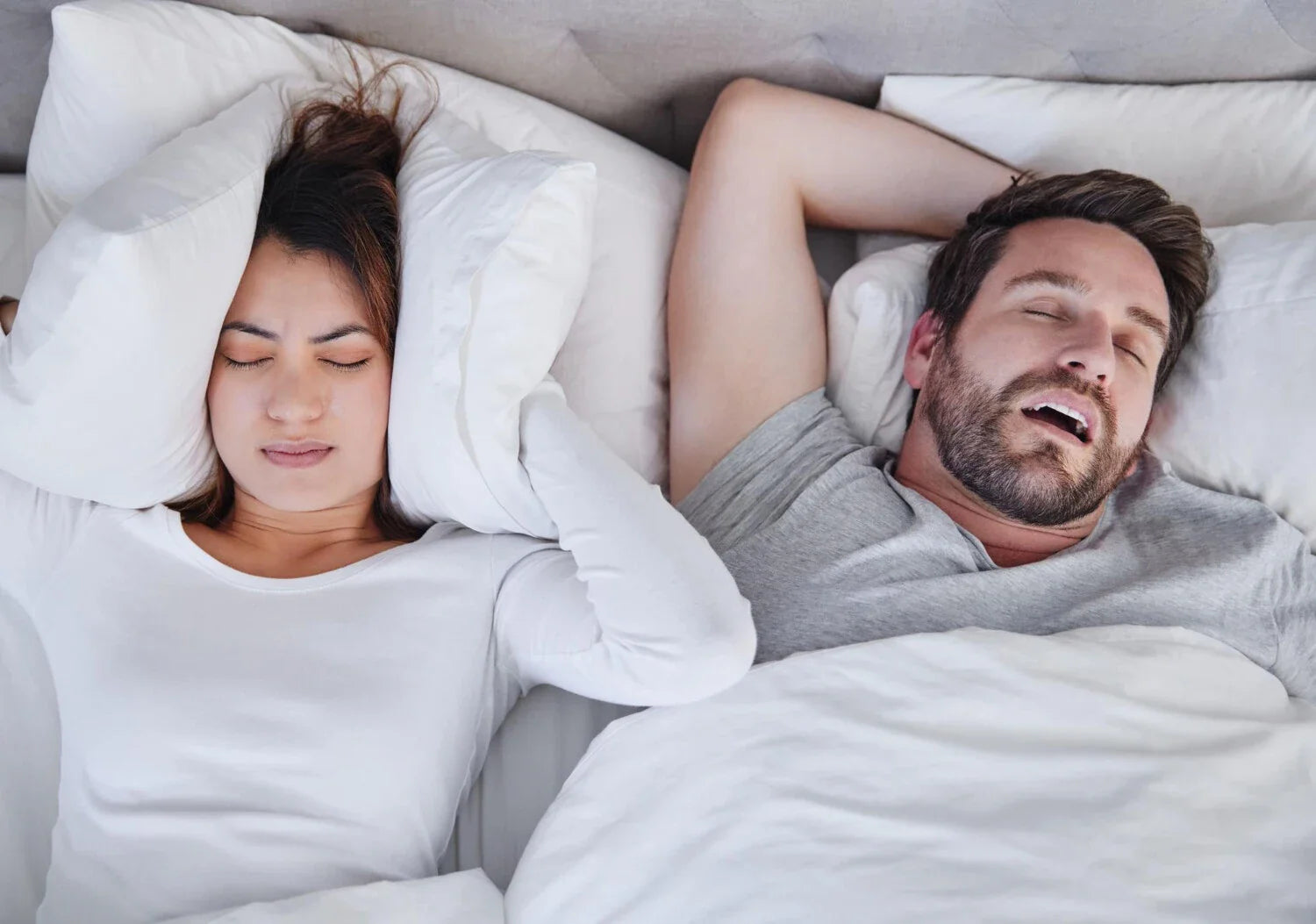
Snoring is the sound that occurs when air passing through the upper respiratory tract during sleep causes the soft tissues in this area to vibrate. In other words, what underlies this is the narrowing of the airway more than normal while sleeping.
This narrowing can occur for several different reasons:
1. Structure of the upper respiratory tract
In some people, the anatomical structure of the throat and nose area is more prone to snoring. For example:
-
A sagging soft palate
-
A long or thick uvula
-
Enlarged tonsils
-
Enlarged adenoids in children
These structural features narrow the throat area during sleep, making it difficult for air to pass and setting the stage for the snoring sound.
2. The nasal passage not being sufficiently open
When you cannot breathe comfortably through your nose, air passes in a more turbulent (more irregular) manner. This can increase vibration and, consequently, the snoring sound. Situations that can cause nasal congestion include:
-
Deviated nasal septum
-
Enlarged nasal conchae (turbinates)
-
Allergic rhinitis
-
Chronic sinusitis
and similar issues.
3. Reduced muscle tone
The muscles in the throat area already relax during sleep. However, in some people, this relaxation is more pronounced, and the airway narrows more easily. This situation can become more apparent:
-
With advancing age
-
With the use of certain medications (such as sedatives or muscle relaxants)
As the muscles relax, the tongue and soft palate sag backward, and the snoring sound emerges.
4. Relationship with sleep apnea
While snoring can occur on its own, it sometimes appears in a condition we call "obstructive sleep apnea." In this case:
-
The upper respiratory tract closes completely from time to time,
-
Breathing stops for short periods,
-
The brain notices the drop in oxygen and wakes you up frequently.
Symptoms such as nocturnal breathing pauses, waking up with a choking sensation, waking up unrefreshed in the morning, and excessive daytime sleepiness indicate that snoring is not just a "sound" but could be a more serious underlying problem.
Choosing the right mattress and pillow can also affect snoring. In particular, a pillow that does not properly support the head and neck angle can contribute to the narrowing of the airway. Likewise, a mattress that is not suitable for your body can negatively affect your sleeping position, making snoring more pronounced.
What Is Good for Snoring?
Snoring does not always stem from a single cause, so there is no one-size-fits-all solution. Nevertheless, some changes you make in your daily life can significantly reduce snoring in many people.
1. Weight control
If there is a noticeable thickening around your neck and you have gained weight recently, losing some weight may alleviate snoring. This is because as fat around the neck area decreases, airways remain more open during sleep.
2. Changing sleep position
When you sleep on your back, your tongue can slide backward and narrow your throat. If this is the case for you:
-
You can try sleeping on your side.
-
Raising your pillow slightly can also reduce the snoring sound in some people.
Even if it does not stop it completely, you might hear comments from those around you like "you snore less when you sleep on your side."
3. Reducing alcohol and cigarettes
-
Alcohol consumed, especially before sleep, can relax throat muscles and make snoring more pronounced.
-
Smoking irritates the respiratory tract, causing swelling.
Quitting completely is the healthiest option, but even just limiting alcohol and reducing cigarettes in the evening hours can make a difference.
4. Alleviating nasal congestion
Temporary nasal congestion (in cases such as allergies, flu, or colds) can increase snoring. During these periods:
-
Nasal sprays approved by your doctor,
-
Maintaining the humidity balance of the room,
-
Avoiding very dry or dusty environments
can ease your breathing and reduce the intensity of snoring. What is important here is not to use sprays indiscriminately and for long periods; you must act based on a physician's recommendation.
5. Regular and adequate sleep
You may have noticed that your snoring increases on days when you are overly tired. Going to bed very late and irregular sleep hours can cause muscles to relax more as you fall asleep, increasing snoring. A more regular sleep routine is beneficial for both your general health and snoring.
How Does Snoring Go Away?
While snoring sometimes eases with simple measures, other times it requires the treatment of an underlying medical condition. Therefore, the answer to the question of "how it goes away" is actually personalized. The general approach is as follows:
The Cause Must Be Found First
When you go to a doctor for your snoring complaint, the first step is usually a detailed history and physical examination. Your doctor will evaluate:
-
How long the snoring has been occurring,
-
Whether there are breathing pauses that you have noticed or that those around you have reported,
-
Accompanying complaints such as daytime fatigue, morning headaches, or concentration problems,
-
Your weight, neck circumference, and any chronic diseases you may have.
Then, the structure of the nose, throat, and inside of the mouth is examined.
Adding Lifestyle Changes to Treatment
Measures such as weight control, sleep position, and reducing alcohol and cigarettes, which we mentioned in the previous section, are fundamental parts of most treatment plans. In other words, if you want to completely stop snoring, these two usually go hand in hand:
-
The medical approach recommended by your doctor
-
The adjustments you make in your daily life
Medical Treatment and Interventions
Snoring can sometimes be entirely due to structural problems. In such cases, your doctor may:
-
Recommend treatments for a problem that causes nasal congestion (deviated septum, enlarged nasal conchae, etc.) if they see one,
-
Consider surgery or other procedures if they identify a condition in your tonsils, adenoids, or soft palate structure that exacerbates snoring.
If there is a suspicion of sleep apnea, your breathing can be monitored throughout the night with a sleep study (polysomnography). If apnea is detected:
-
Devices that need to be used (CPAP, etc.) or
-
More advanced treatment methods
may come to the fore. At this point, the goal is not just to stop the sound, but also to eliminate the drops in oxygen during sleep and the risks that may occur for the cardiovascular system.
The "Definitive Solution" Is Not the Same for Every Snore
While snoring decreases significantly with simple measures in some people, more comprehensive treatments are needed for others. Therefore, it would not be correct to say, "apply this method, and snoring will definitely go away." The best path for you is a personalized treatment plan that will be determined through examinations and, if necessary, tests.
Which Doctor Should You See for Snoring?
Knowing which department to go to for snoring makes the process much easier. Snoring can be a solitary ear, nose, and throat problem, or it can be part of a much broader clinical picture like sleep apnea.
The First Department You Should Apply To: ENT (Ear, Nose, and Throat)
ENT is usually the first area of expertise consulted for snoring complaints. An ENT doctor evaluates in detail:
-
Whether you have nasal congestion,
-
Your tonsils, adenoids, soft palate, and uvula structure,
-
Other structures in the mouth and throat area that could cause narrowing.
Most of the time, the examination here sheds light on a significant portion of the problem.
Departments That Get Involved in Case of Suspected Sleep Apnea
If some of the following situations also accompany snoring, your doctor may refer you to other departments or a sleep center:
-
If a relative reports that your breathing stops during sleep
-
If you wake up at night as if choking
-
If you wake up unrefreshed, with a headache, or feeling tired in the morning
-
If you have a constant state of sleepiness during the day
In this case, the following may be involved in the process:
-
Pulmonology,
-
Neurology,
-
Sleep centers / sleep laboratories
With a sleep study, your breathing, oxygen levels, and sleep stages throughout the night are examined in detail.
It Is Also Possible to Start with a Family Physician or Internal Medicine
If you don't feel ready to go directly to an ENT specialist or if you want a general evaluation first, you can also apply to your family physician or an internal medicine specialist. If they deem it necessary, they will refer you to the relevant branch.
Frequently Asked Questions (FAQ) About Snoring
What Disease Can Snoring Be a Symptom Of?
Snoring can be a symptom of obstructive sleep apnea, especially if accompanied by breathing pauses during sleep; it can also accompany problems such as nasal congestion, adenoids, enlarged tonsils, and being overweight.
Does Snoring Affect Heart Health?
If snoring is accompanied by sleep apnea, drops in oxygen throughout the night can place a burden on the cardiovascular system and, in the long term, increase the risk of hypertension and heart disease.
Is Snoring Normal in Children?
Mild, occasional snoring in children can sometimes be innocent, but regular, loud snoring should definitely be evaluated by a doctor, as it may be a harbinger of problems such as adenoids, enlarged tonsils, or sleep apnea.
Why Does Snoring Increase During Pregnancy?
Weight gain, fluid retention in the body, and mucosal swelling due to hormones during pregnancy can narrow the nasal and throat area, which may cause or increase snoring even in an expectant mother who did not snore before.
I Wake Up at Night as If My Breath Is Suddenly Cut Off, Is This Related to Snoring?
Waking up at night as if choking, the sensation of breath being cut off, and snoring accompanying this are warning signs for sleep apnea, and in this case, it is necessary to consult a specialist without delay.




Share:
What Is Sleep Apnea?
What Causes Insomnia?