


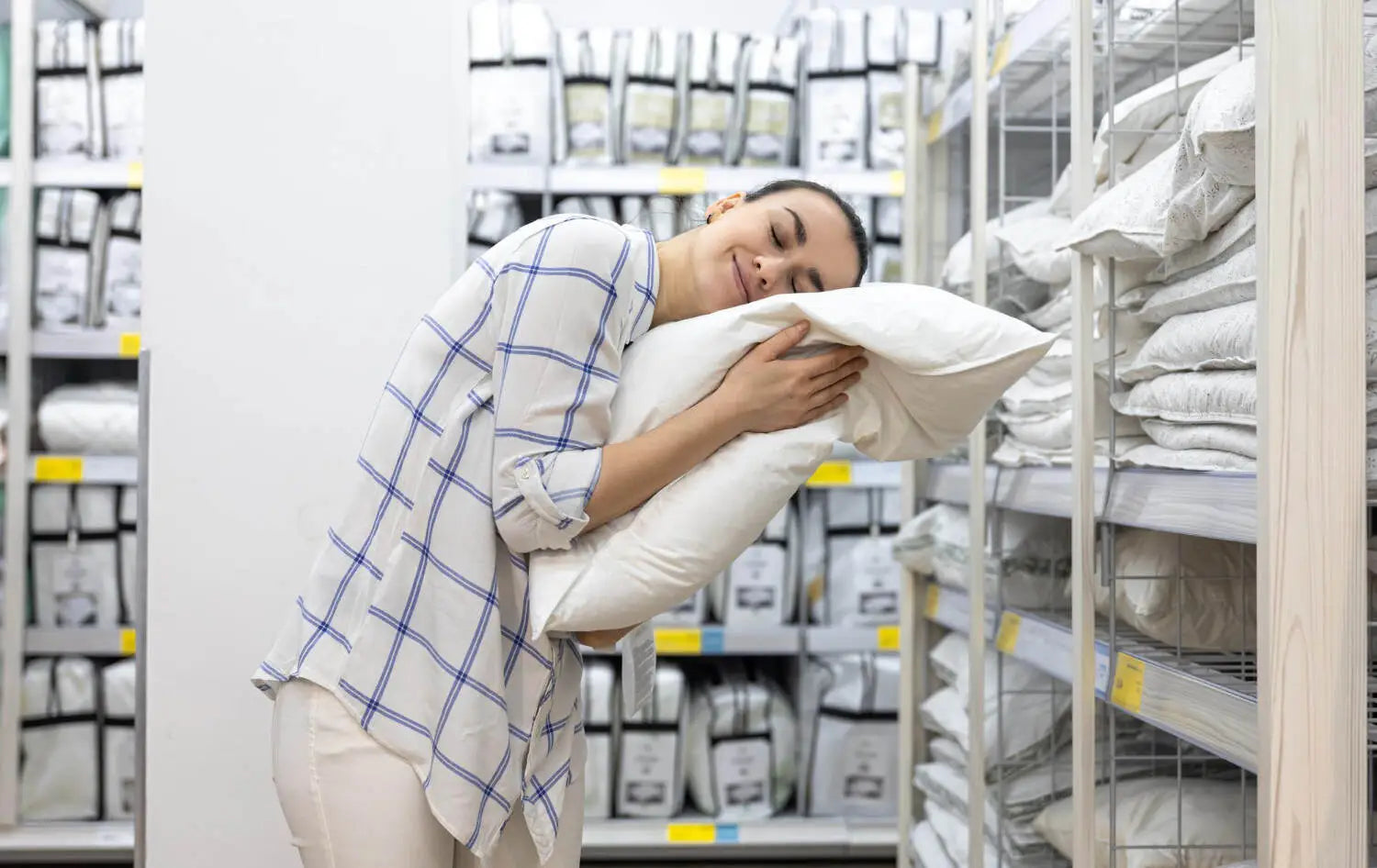
That nagging pain that lasts all day prevents you from focusing and steals your energy. Perhaps the dozens of pillows you've tried have only made the problem worse instead of solving it. It is perfectly normal to feel lost in the pillow aisle.
But we have good news for you: The problem wasn't the pillows, but rather choosing one that wasn't right for you. This guide is a roadmap tailored specifically for you to find that perfect pillow. We are putting an end to the trial-and-error game.
Choosing a Pillow Based on Sleeping Position
The first and most important step in choosing a pillow is knowing which position you sleep in most at night. This is because the right pillow should keep your head and neck in a straight line, as a natural extension of your spine. As the Sleep Foundation also states, sleeping position is the most critical factor in choosing pillow height.
Choosing a Pillow for Side Sleepers
If you usually sleep on your side, you need a high and supportive pillow that will fill the gap between your head and shoulders. The goal is to prevent your neck from drooping or tilting upward. According to orthopedic principles, Visco or Latex pillows are ideal for this position due to the intensive support they offer.
Choosing a Pillow for Back Sleepers
For back sleepers, maintaining the natural 'S' curve of the spine is essential. You should choose a medium-height pillow that won't push your head too far forward and will gently fill the space under your neck. Contoured orthopedic pillows with neck support are perfect for those who sleep in this position.
Choosing a Pillow for Stomach Sleepers
This position, which physiotherapists frequently warn against, is the sleeping style that puts the most pressure on the neck and spine. If you cannot break this habit, you should use a low, soft pillow or try sleeping without a pillow entirely to prevent your head and neck from being forced backward. Down feather or soft bamboo pillows may be considered for this position.
Choosing a Pillow Based on Pillow Type
We have determined the right position. Now it's time to choose the material inside your pillow. Each material has its own character and benefits.
Visco Orthopedic Pillows: Smart Support Technology
Visco's "memory foam" feature involves softening with your body heat to take the shape of your neck and head. This eliminates pressure points and allows the muscles to relax completely. It is one of the best solutions for those looking for a pillow for cervical disc herniation or those suffering from chronic neck pain.
Natural Latex Pillows: Breathable Comfort
Derived from the sap of the rubber tree, latex is both flexible and durable thanks to its natural structure. Its internal air channels allow it to breathe throughout the night, providing a cool sleeping environment. Offering both orthopedic support and anti-allergic properties makes it a healthy and comfortable choice.
Luxury Down Pillows: Sleeping on Clouds
If your priority is softness and luxurious comfort rather than orthopedic support, down pillows are just for you. With their lightweight and moldable structure, they gently cradle your head. However, it should be noted that they are not as assertive as Visco or Latex when it comes to neck support.
Anti-Allergic Bamboo and Children's Pillows: A Safe and Healthy Choice
Bamboo fiber naturally possesses antibacterial and hypoallergenic properties. Its moisture-wicking structure reduces sweating and provides an excellent environment for sensitive skin. Due to these features, it is a top choice for parents when selecting pillows for children. For more information, you can visit our Bamboo baby pillow product page.
Cooling Pillows (Outlast Technology): Put an End to Sweating
If you struggle with night sweats, pillows featuring smart fabric technologies like Outlast, developed by NASA, are life-savers. This technology absorbs excess heat when your body temperature rises and releases it when it drops, thereby creating an ideal micro-climate throughout the night.
Choosing a Pillow Based on Your Health
We've learned the general rules; now it's time to discover how to choose the right pillow according to your health condition. Remember, while the right pillow is not a medical treatment tool, it is your most important ally in supporting your recovery process and alleviating your pain.
Pillow Selection for Cervical Straightening
Pillow selection for cervical straightening should aim to restore the neck's natural 'C'-shaped curve. For this reason, low to medium-height orthopedic pillows with rolls or contours designed specifically to fill the neck cavity from below should be chosen.
The fundamental issue in cervical straightening is the loss of the spine's natural curve. The purpose of the pillow to be used is to gently invite the vertebrae into their required position by filling the nape cavity directly without raising the head too much. Also known as "cervical pillows," these models provide passive postural correction support throughout the night.
Pillow Selection for Neck Pain
Pillow selection for general neck pain should focus on materials that fully support the muscles and eliminate pressure points. Visco (memory foam) pillows that take shape with body heat to mimic your neck, or latex pillows that offer flexible and dynamic support, are ideal for this purpose.
The root cause of morning neck pain is muscles remaining tense instead of relaxing throughout the night. Materials like Visco and latex distribute the weight of the head evenly, preventing pressure buildup at specific points. This allows the muscles to relax completely, so you wake up feeling rested.
Pillow Selection for Stiff Neck
Pillow selection for recurring stiff neck involves preventing the neck from staying at an incorrect angle throughout the night with a pillow of the correct height suitable for your sleeping position. Especially if you are a side sleeper, it is critical to use a high pillow that perfectly fills the gap between your shoulder and head.
A stiff neck is usually caused by muscles being stretched or compressed in an abnormal position during the night. A side sleeper using a low pillow causes their head to drop, resulting in the neck muscles being strained all night long. Your goal is to ensure your head forms a straight line with your spine, no matter what position you sleep in.
Pillow Selection for Cervical Hernia
Pillow selection for a cervical hernia is based on reducing pressure between vertebrae and relieving nerve roots. For this reason, specially contoured (butterfly) orthopedic visco pillows that fully grasp the neck curve, allow the head to tilt slightly back, and restrict unwanted movements are highly recommended. These specially designed pillows cradle the neck like a mold, stabilizing it. This stabilization relieves pressure on the herniated disc and prevents further irritation of the nerves.
Now you are ready to make an informed choice. Browse our Pillow Varieties collection, specifically designed for your sleeping position and health needs, and take the first step toward pain-free mornings!
Frequently Asked Questions (FAQ) About Pillow Selection
Does an orthopedic pillow really make a difference?
Yes. A correctly chosen orthopedic pillow keeps your spine aligned, allows muscles to relax, reduces pressure points, and improves blood circulation. This means deeper, uninterrupted sleep and pain-free mornings.
How often should a pillow be changed?
Although it varies depending on the material, the general rule is to replace pillows every 2-3 years. Over time, pillows lose their hygienic properties and supportive form. If your pillow doesn't return to its original shape when you fold it in half, it's time to replace it.
Which is the healthiest pillow for children?
The healthiest pillow for children is one made of low, breathable, and anti-allergic materials. Bamboo and natural latex pillows stand out with these features. Pillow use is generally not recommended before the age of 2.
Is there a pillow that prevents sweating in the summer?
Yes. Latex pillows with natural air channels, gel-layered visco pillows, or cooling pillows produced with thermal regulating technology fabrics like Outlast significantly reduce sweating during the summer months.
Is sleeping without a pillow healthy?
It might be an option only for those who sleep on their stomachs. For side or back sleepers, sleeping without a pillow is strictly not recommended as it causes the neck to remain unsupported and disrupts spinal alignment.

Share:
What Is an Orthopedic Mattress? How Should It Be?
How Should a Baby's Sleep Schedule Be?