


How to choose the right mattress for spinal development in children?
Choosing the right mattress for spinal development in children requires combining a medium-firm surface appropriate for the child's age and weight with a material that keeps the spine straight, flexes, and recovers. Natural latex or sponge structures with Air Clean technology provide both support and hygiene, helping the growing spine align properly. This guide explains the decision-making process step by step, from hardness levels to material selection.
The following list summarizes the decision-making process:
- Determine the hardness range by assessing the child's age and weight.
- Choose natural latex or visco material that supports spinal alignment.
- Consider a mattress model with Air Clean technology for hygiene.
- Choose the mattress size based on the child's current height and growth margin.
- Test for breathability and sweat control.
- Check for GOLS certification and the "no aniline" label.
- Test the mattress at home with a 100-day trial period.
- Add complementary products such as orthopedic pillows and bed rails.
Table of Contents
- Prerequisites: What you need to know before choosing a mattress
-
The children's mattress selection process: a step-by-step guide
- Step 1: Determine the hardness level based on age and weight
- Step 2: Choose a material that supports spinal alignment
- Step 3: Evaluate technology that provides hygiene and allergen control
- Step 4: Choose the mattress size based on the growth phase
- Step 5: Test for breathability and thermal balance
- Step 6: Check certificates and safety standards
- Step 7: Evaluate the trial period and warranty conditions
- Step 8: Complement spinal support with pillows and accessories
- How to know you've made the right choice: success checklist
- Common mistakes and their solutions
- Comparison of mattress types: latex, visco, and spring systems
-
Frequently Asked Questions
- When should a child's mattress be replaced?
- Does a soft mattress harm the spine?
- Are natural latex or Air Clean technology sponges more suitable?
- Which mattress is recommended for children with allergies?
- How long does it take to get used to a new mattress?
- How much larger than the child's height should the mattress be?
Prerequisites: What you need to know before choosing a mattress
Before moving on to choosing the right mattress, it is necessary to clarify three pieces of information: the child's age and weight, the duration of use of the current mattress, and any history of allergies. This information directly affects the decision on hardness and material. Noting the bed frame measurements and the room's humidity level makes choosing the size and breathability easier. For children with a history of allergic reactions, models with antibacterial and antiallergenic properties should be prioritized.
The children's mattress selection process: a step-by-step guide
The following eight steps address the entire decision-making process sequentially, from hardness level to accessory selection.
Step 1: Determine the hardness level based on age and weight
A child's age and weight are the first criteria for determining the mattress's hardness level. For lighter children between the ages of 3-6, the spine feels less pressure, so a medium-firm surface generally provides sufficient support. For children 7 years and older who are gaining weight, models in the medium-firm category should be preferred to prevent spinal sagging. If the hardness level is chosen too low, the spine may remain in a curved position throughout the night; if it is chosen too high, pressure may build up in the shoulder and hip areas.
Tip: A simple indicator of an appropriate hardness level is if there is no gap between the child's waist and the mattress when they are lying on their back.
Step 2: Choose a material that supports spinal alignment
Material selection ensures the spine remains properly aligned throughout the night. Natural latex, thanks to its flexible structure, shapes itself according to heavy points like shoulders and hips while keeping the spine straight; models in the natural latex collection carry this feature. Visco or hybrid sponge structures offer similar support by responding to body heat, but their recovery speed is slower than that of latex. Spring systems are not recommended on their own for growing children as they can create point pressure.
Step 3: Evaluate technology that provides hygiene and allergen control
Hygiene is as important for children's mattresses as spinal support; sweat and moisture accumulation lead to skin irritation and indirectly to reduced sleep quality. Air Clean technology offers a cleaner sleeping environment in the morning by reducing moisture and bacterial accumulation on the mattress surface. The Logic Kids Air Clean Mattress and Code Kids Air Clean Mattress models adapt this technology to children's sizes. For children with a history of allergies, the anti-allergic mattress collection can also be considered.
Step 4: Choose the mattress size based on the growth phase
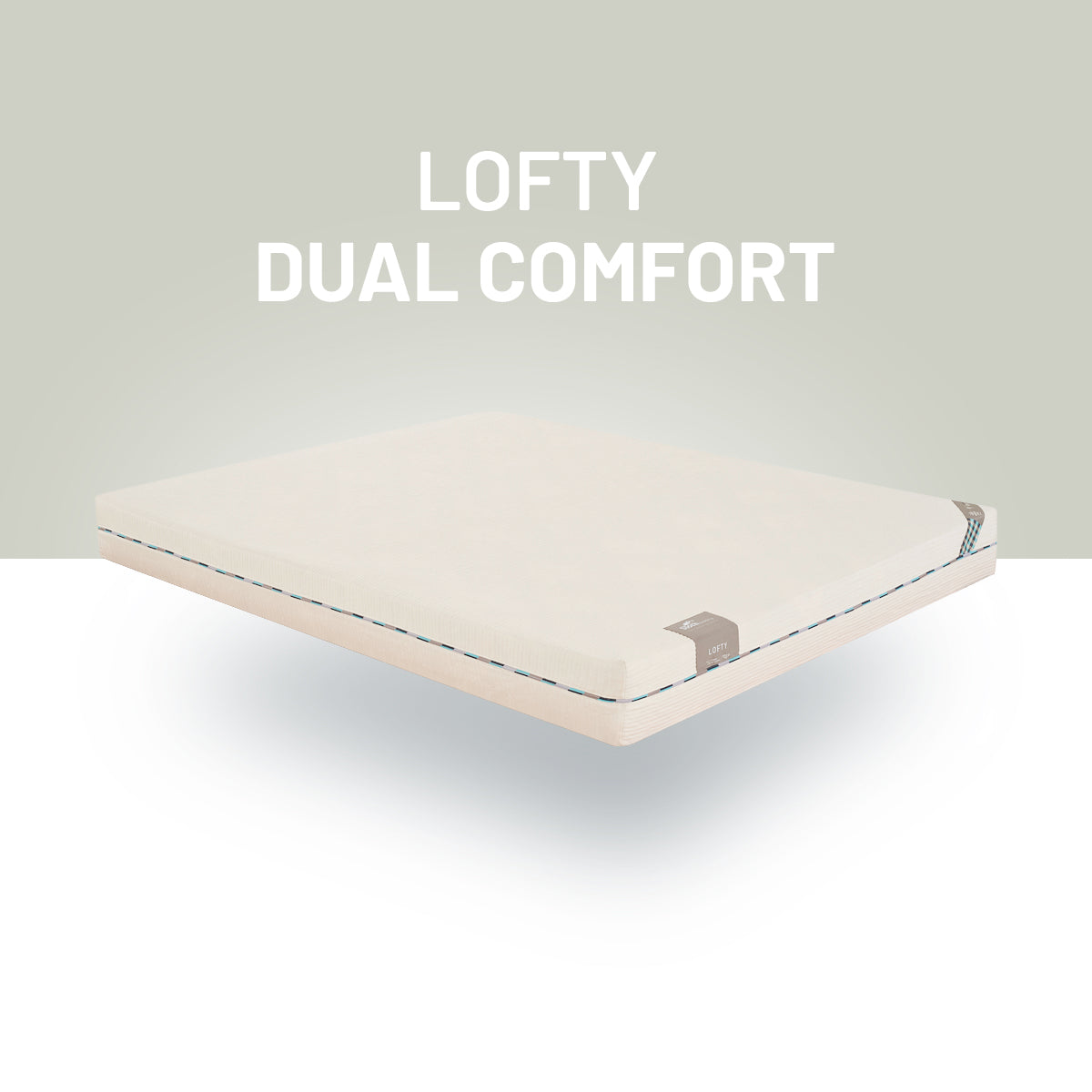
The mattress length should be chosen at least 15-20 cm longer than the child's current height; this prevents the mattress from becoming too small prematurely during the growth process. 15 cm thick models, such as the Lofty Kids Organic Latex Children's Mattress, offer both growth margin and sufficient support thickness. Ensuring there is no gap between the bed frame size and the mattress size prevents the mattress from shifting and disrupting spinal alignment.
Step 5: Test for breathability and thermal balance
Breathability keeps body temperature balanced throughout the night and reduces awakenings due to sweating. While the pores in the natural latex structure constantly circulate air, Air Clean technology further reduces moisture accumulation. For a newly purchased mattress, you can observe the sweat level by checking the child's back during the first few nights; excessive sweating is a sign that the material is not breathing enough.
Step 6: Check certificates and safety standards
Certificates verify that there are no harmful substances in the mattress content. The GOLS certificate indicates that the latex is produced from organic sources, while the "no aniline" label indicates that no chemical dyeing process was used. The Lofty Kids and Lofty Multi Zone 7-Zone Ergonomic 100% Natural Latex Mattress both carry these two standards. If certificate information is not available on the product page, confirmation should be requested from the manufacturer before purchase.
Step 7: Evaluate the trial period and warranty conditions
Whether a mattress is suitable for a child's spine is understood within a few weeks of actual use. A 100-day trial period allows you to test the mattress at home and provides the opportunity for an exchange if it does not provide the expected support. Warranty conditions should be checked to see if production-related issues such as stitching, sponge sagging, and zippers are covered.
Warning: Using the mattress with a protective cover during the trial period preserves the validity of the return or exchange right.
Step 8: Complement spinal support with pillows and accessories
Spinal support is not limited to the mattress; pillow and positioning products also help maintain the same alignment. The Slothy Visco Kids Tencel Anti-Allergic Purotex Children's Pillow is designed to support neck and spinal alignment. For smaller children, products such as the Slothy Holdy Bed Rail help maintain a stable sleeping position throughout the night by preventing them from falling out of bed.
How to know you've made the right choice: success checklist
When the right mattress is chosen, it is expected that the child will not report back or neck complaints upon waking in the morning, the frequency of nighttime awakenings will decrease, and there will be no significant sagging in the mattress. It should be observed that the spinal line remains straight when lying on the back, and the waist is supported while the shoulders and hips sink slightly when lying on the side. If sweat complaints have decreased and there is no smell of moisture on the mattress surface, the hardness and material combination has been chosen correctly.
Common mistakes and their solutions
- Deciding based only on price: low-priced spring systems often create point pressure; it is safer to look at hardness and material compatibility.
- Giving the child a directly reduced version of an adult mattress: children's mattresses are produced with different densities, and adult hardness is often too much.
- Not accounting for growth margin: a mattress chosen too narrow will require replacement within a few years.
- Ignoring hygiene features: moisture and allergen accumulation accelerate in mattresses purchased without technologies like Air Clean.
- Not using the trial period: deciding without utilizing the 100-day period leads to late detection of an inappropriate hardness selection.
Comparison of mattress types: latex, visco, and spring systems
| Material | Spinal support | Breathability | Outstanding feature |
|---|---|---|---|
| Natural latex | High, balances point pressure | High, porous structure | GOLS certified, long-lasting |
| Air Clean sponge | Medium-high, sensitive to body heat | Medium, moisture-reducing technology | Reduction of bacteria and allergens |
| Spring system | Variable, risk of point pressure | Medium | Generally more affordable |
To compare the differences between natural latex and memory foam more thoroughly, you can check out the natural latex mattress vs. memory foam mattress article. The Slowbie Baby Mattress, which is a separate category for infants, meets different hardness requirements during the newborn period.
Frequently Asked Questions
When should a child's mattress be replaced?
A child's mattress should generally be replaced after 5-8 years of use or when the child's height exceeds the mattress's 15-20 cm growth margin. When significant sagging, clumping, or stitching tears are visible on the surface, spinal support weakens and replacement becomes necessary. Increased allergic reactions can also be a sign of material fatigue.
Does a soft mattress harm the spine?
An excessively soft mattress can cause the spine to remain in a curved position throughout the night, potentially contributing to back and neck discomfort over time. Especially in children who are gaining weight, very soft surfaces cause the waist area to sink. The medium-firm range is a safer starting point for most age groups.
Are natural latex or Air Clean technology sponges more suitable?
The choice depends on the primary need: if long-lasting natural support is desired, latex is better, whereas if moisture and bacterial control are the priority, models with Air Clean technology are more suitable. For families who want both features, some models add an Air Clean layer on top of a latex core. For children with a history of allergies, anti-allergic certified options are the priority.
Which mattress is recommended for children with allergies?
For children with allergies, models with antibacterial and anti-allergic properties that reduce moisture accumulation are recommended. The products in the anti-allergic mattress collection are produced with surface technologies that limit mite and bacteria growth. Anti-allergic materials like Purotex should also be preferred when choosing pillows.
How long does it take to get used to a new mattress?
For most children, the process of getting used to a new mattress is completed within 1-2 weeks, and small fluctuations in sleep patterns may be observed during this time. The 100-day trial period provides the opportunity to observe this adjustment process comfortably. If complaints persist for more than 3 weeks, the hardness or material preference should be re-evaluated.
How much larger than the child's height should the mattress be?
The mattress length should be chosen at least 15-20 cm longer than the child's current height, and this margin accommodates several years of growth. Ensuring no gap is left between the bed frame size and the mattress size prevents the mattress from shifting and disrupting spinal alignment. For children growing very early, models close to the upper limit of this margin can be preferred.


Share:
Maintaining Humidity and Temperature Balance in the Bedroom | SlothBedding
2026 Mattress Buying Guide: Tips from SlothBedding