


How to achieve humidity and heat balance in the bedroom
Humidity and heat imbalance in the bedroom leads to sweating, a feeling of suffocation, and frequent waking. To achieve humidity and heat balance in the bedroom, the room should be ventilated regularly, the humidity level should be measured, and a mattress with Air Clean technology (a system that reduces moisture and bacteria buildup inside the mattress throughout the night) should be chosen. When these steps are applied, the mattress remains dry until morning, and sleep quality increases significantly.
- Measure the humidity and temperature level.
- Ventilate the bedroom in the morning and evening.
- Choose a breathable mattress protector.
- Use a mattress with Air Clean technology.
- Choose a natural latex mattress.
- Use a heat-regulating pillow.
- Clean the mattress at regular intervals.
- Check the results weekly.
- Humidity and temperature imbalance trigger sweating, night awakenings, and allergic reactions.
- Air Clean technology is a system that reduces moisture and bacteria accumulated inside the mattress throughout the night.
- The natural latex structure wicks away moisture through air channels and keeps the mattress cool.
- 100-Day Trial Period provides the opportunity to test the humidity and heat performance of the chosen mattress in real-world use.
- The choice of mattress protector, pillow, and duvet also directly affects the humidity-heat cycle within the room.
Contents
- Necessary tools and preparation
-
Step-by-step humidity and heat balance setup
- Step 1: Measure the humidity and temperature level
- Step 2: Ventilate the bedroom regularly
- Step 3: Choose a breathable mattress protector
- Step 4: Use a mattress with Air Clean technology
- Step 5: Choose a natural latex mattress
- Step 6: Use a heat-regulating pillow
- Step 7: Clean the mattress at regular intervals
- Verifying results: has humidity and heat balance been achieved
- Common mistakes and corrections
- Method comparison: which solution works when
-
Frequently asked questions
- How to measure the ideal humidity level in the bedroom
- How does Air Clean technology provide humidity balance
- How does a natural latex mattress contribute to humidity and heat balance
- How to cool the bedroom without using air conditioning
- Which pillow and duvet should be chosen for those who sweat while sleeping
- How to use the 100-day trial period to test humidity balance
Necessary tools and preparation
A few simple tools are sufficient to begin the work of balancing humidity and heat in the bedroom. A hygrometer (a measuring device that shows humidity and temperature simultaneously), a room layout where window ventilation can be performed, and filling information for the current mattress, pillow, and duvet set are required. Products with synthetic foam or polyester filling should be noted beforehand as they retain moisture.
Reviewing product information about Air Clean technology on the Air Clean Technology page accelerates the decision on which mattress to choose in the following steps.
Step-by-step humidity and heat balance setup
The following seven steps are applied in order, from measurement to product selection. Each step is based on the result of the previous one, so it is recommended to follow them without skipping.
Step 1: Measure the humidity and temperature level
The humidity and temperature level in the bedroom are measured for several consecutive nights using a hygrometer. Measurements are taken upon waking in the morning and before going to sleep at night, and the results are noted. This record shows how much the room humidifies or heats up during the night and determines which product is needed in subsequent steps.
Tip: If the measuring device is kept in the middle of the room at eye level rather than directly on the bed, it provides more reliable results.
Step 2: Ventilate the bedroom regularly
Windows are opened upon waking in the morning and before going to sleep at night to provide cross-ventilation. This allows humid air accumulated during the night to escape and fills the room with fresh air. In rooms that are not ventilated regularly, moisture buildup increases, and mattress materials are negatively affected by this.
Warning: In humid climates, windows should preferably be opened during the day; outside humidity should not be allowed to enter at night.
Step 3: Choose a breathable mattress protector
A mattress protector that is liquid-proof but has a breathable structure stops sweat and liquid leakage before it reaches the mattress layers. Models with these features can be found in the mattress cover collection. Completely sealed, non-air-permeable covers should not be chosen, as such products trap moisture inside the mattress.
Step 4: Use a mattress with Air Clean technology
Air Clean technology is a system that reduces moisture and bacteria accumulated throughout the night by creating air circulation between mattress layers. The Reboot Air Clean Mattress, Connect Air Clean Mattress, and Code Air Clean Mattress models use this technology. The operating principle of the system is explained in detail on the Air Clean Technology page.
Step 5: Choose a natural latex mattress
The pores in the natural latex structure allow airflow and prevent moisture from accumulating inside the mattress. Models in the natural latex collection provide more air circulation compared to synthetic foam. In hot climates or for users who sweat a lot, this choice becomes decisive in maintaining heat balance.
Step 6: Use a heat-regulating pillow
Sweating in the head and neck area varies depending on the pillow material. Heat-regulating pillows like the Slothy Cool Outlast Pillow absorb and balance sudden increases in body temperature. This type of pillow reduces sleep disruption, especially on hot summer nights.
Step 7: Clean the mattress at regular intervals
After humidity and heat balance is established, the mattress must be cleaned regularly to maintain this balance. The safety of the ozone cleaning method is examined in detail in the ozone mattress cleaning guide. Self-cleaning mattress options are also included in the 2026 model comparison.
Verifying results: has humidity and heat balance been achieved
The mattress surface being dry upon waking in the morning, the absence of sweat stains on the sheets, and the hygrometer reading being lower compared to previous records indicate that balance has been established. A decrease in the number of awakenings during sleep is another indicator. These measurements are repeated for a week to verify the results.
Common mistakes and corrections
- Only using air conditioning and neglecting ventilation keeps moisture buildup going; windows should also be opened at certain times of the day.
- Choosing synthetic-filled pillows and duvets retains moisture; heat-regulating or natural latex alternatives should be chosen.
- Not measuring humidity at all makes the results of changes invisible; decisions should not be made without a hygrometer.
- Using a non-breathable mattress protector traps moisture inside the mattress; breathable models should be chosen.
- Not cleaning the mattress at all increases moisture and bacteria buildup over time; regular cleaning and solutions like Air Clean technology limit this buildup.
Method comparison: which solution works when
| Method | Humidity control | Heat control | Note |
|---|---|---|---|
| Natural ventilation | Moderate | Moderate | Cost-free, climate-dependent |
| Air conditioning or dehumidifier | High | High | Electricity consumption occurs |
| Mattress with Air Clean technology | High | Moderately high | Works continuously throughout the night |
| Natural latex mattress | Moderately high | High | Does not require a device |
| Heat-regulating pillow and duvet | Moderate | High | Point-based solution |
Frequently asked questions
How to measure the ideal humidity level in the bedroom
The humidity level in the bedroom is measured with a hygrometer and the results are recorded for several consecutive nights. If measurements are taken twice a day, morning and evening, it becomes clearer how much the room humidifies during the night. The measuring device should be kept in the middle of the room, away from the bed.
How does Air Clean technology provide humidity balance
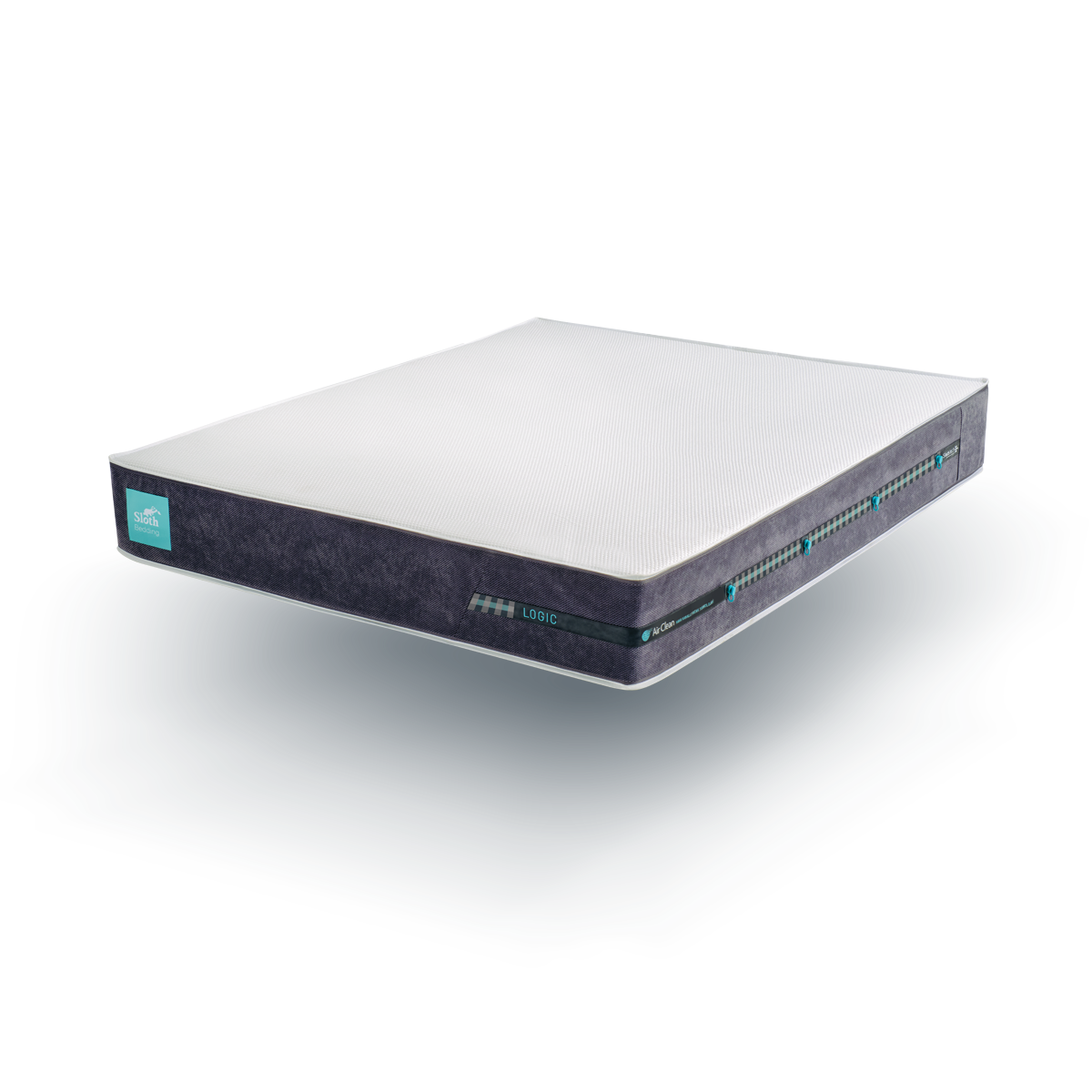
Air Clean technology is a system that reduces moisture and bacteria accumulated throughout the night by creating air circulation between mattress layers. The Reboot, Connect, Code, and Logic Air Clean Mattress models use this structure. The system does not require an additional device or electricity to work.
How does a natural latex mattress contribute to humidity and heat balance
The porous structure of natural latex allows airflow and prevents moisture from accumulating inside the mattress. This feature provides better heat dissipation compared to synthetic foam mattresses. For this reason, models in the natural latex collection are preferred in hot climates or for users who sweat a lot.
How to cool the bedroom without using air conditioning
The bedroom can be cooled without air conditioning through a combination of cross-ventilation, a natural latex mattress, and a heat-regulating pillow. Opening windows in the morning and evening allows hot and humid air accumulated during the night to escape. These methods work without electricity consumption.
Which pillow and duvet should be chosen for those who sweat while sleeping
For those who sweat while sleeping, pillows with a heat-regulating structure and non-sweat duvet models should be chosen. The Slothy Cool Outlast Pillow absorbs and balances sudden increases in body temperature. Products with synthetic filling are not recommended for this group as they retain moisture.
How to use the 100-day trial period to test humidity balance
100-Day Trial Period provides the opportunity to test the humidity and heat performance of the chosen mattress under real-use conditions. During this period, hygrometer measurements and morning checks are repeated to verify the suitability of the mattress for the user. The process is explained in detail on the 100-Day Trial page.

Share:
Choosing a Child's Mattress: A Guide to the Right Firmness | SlothBedding
2026 Mattress Buying Guide: Tips from SlothBedding