


How to choose mattress firmness based on weight and sleep position?
The wrong mattress firmness is the most common cause of waking up with back pain in the morning. Your weight and sleep position directly determine the load your spine carries throughout the night. This guide helps you find the firmness level that truly works for you by considering these two variables together.
Table of Contents
- What is mattress firmness and how does its scale work?
- How does sleep position affect firmness selection?
- The relationship between weight and firmness: A numerical perspective
- Evaluating weight and sleep position together
- Common mistakes when choosing mattress firmness
- Firmness options in SlothBedding mattresses
- Frequently Asked Questions
- Mattress firmness is measured on a scale of 1 to 10; 1 is very soft, 10 is very firm.
- Sleep position and weight are two complementary factors regarding spinal alignment.
- Side sleepers under 70 kg usually benefit from a firmness rating between 3-5.
- For back sleepers over 90 kg, a firmness between 6-8 supports the spine better.
- Choosing the wrong firmness increases the risk of lower back and neck pain in the morning.
- SlothBedding's 100-night trial period allows you to test your firmness preference under real sleep conditions.
What is mattress firmness and how does its scale work?
Mattress firmness is the level of resistance the surface offers against body weight. A scale ranging from 1 to 10 is commonly used in the industry. 1-3 is defined as soft, 4-6 as medium, and 7-10 as firm.
This scale may vary slightly from manufacturer to manufacturer. What one brand calls "medium-firm" might fall into the "firm" category at another. That is why actual experience is just as important as the numerical value.
Firmness is not just a matter of comfort. It directly affects whether the spine maintains its natural S-curve. A mattress that is too soft causes the hips to sink, while a mattress that is too firm leads to the accumulation of pressure points.
How does sleep position affect firmness selection?
The points where your body contacts the mattress change depending on your position. This is why different positions for the same weight create a need for different firmness levels.
Back sleepers
For back sleepers, the lumbar region is the critical point. The lower back does not touch the mattress; it stays suspended. On a surface that is too soft, the lower back sags and lordosis is disrupted. A surface that is too firm, however, creates pressure on the shoulders and hips.
A firmness rating between 5-7 is generally the right balance for back sleepers. This range supports the lower back without compressing the shoulder area. You can also review our detailed content prepared for side sleepers.
Side sleepers
Side sleepers create concentrated pressure points in the shoulder and hip areas. Allowing these points to sink into the mattress keeps the spine straight.
A mattress ranging from soft to medium-firm (3-5) is suitable for most side sleepers. If the shoulders do not sink in, the neck tilts to the side, and morning neck stiffness becomes inevitable.
Stomach sleepers
Sleeping on your stomach is the riskiest position for the lower back. The lower back tends to sag toward the mattress. For this position, a medium-firm surface between 5-7 slows down the sagging of the lower back. You can find more details in the guide we prepared for stomach sleepers.
The relationship between weight and firmness: A numerical perspective
Weight determines the amount of pressure placed on the mattress. A heavier body will sink more into a mattress of the same firmness. This simple physics explains why weight is such a deciding factor in choosing firmness.
A general framework looks like this:
- 54 kg and under: Soft surfaces (2-4) ensure the body sinks into the mattress sufficiently. On a firm mattress, there is not enough sense of support at this weight.
- 55-80 kg: Medium firmness (4-6) appeals to a wide range of people. Depending on the position, one should lean toward the lower or upper end of this range.
- 81-100 kg: Between medium-firm and firm (6-7) can support the spine for a long time. A soft surface sinks rapidly in this weight range.
- Over 100 kg: Firm surfaces (7-9) are preferred. Especially high-density foam or hybrid structures offer long-lasting support in this weight category.
These figures are not absolute but serve as a starting point. Position and personal preference can shift these ranges by a few points.
Evaluating weight and sleep position together
Knowing the two variables separately is not enough; one must consider them both at the same time. The table below turns this combination into a practical guide:
| Sleep position | 54 kg and under | 55-80 kg | 81-100 kg | Over 100 kg |
|---|---|---|---|---|
| Back | 3-5 | 5-6 | 6-7 | 7-8 |
| Side | 2-4 | 4-5 | 5-6 | 6-7 |
| Stomach | 4-5 | 5-6 | 6-7 | 7-8 |
For those who sleep in multiple positions, the middle of the values in the table serves as a good starting point. For example, for someone who weighs 75 kg and sleeps both on their back and side, 5-6 is a reasonable target range.
In couples sleeping together, if both individuals have different weights and positions, mattresses with two separate firmness zones or models where each person can choose their own side individually offer practical solutions.
Common mistakes when choosing mattress firmness
Many people make this choice based only on how it feels the first time they lie down. Lying down in a store for a few minutes does not reflect the real sleep experience. A mattress changes slightly over time due to body temperature.
Other mistakes include:
- Deciding based only on one person's weight for shared mattresses.
- Relying on general truths like "a firm mattress cures back pain." The cause of back pain is not always a soft mattress.
- Using the manufacturer's firmness scale as a tool for cross-brand comparison.
- Thinking about mattress material and firmness independently. Latex and foam feel different at the same firmness rating.
- Thinking that current mattress surface layers (toppers) are a substitute for a long-term solution.
Real test periods, such as a 100-day trial, eliminate most of these mistakes.
Firmness options in SlothBedding mattresses
SlothBedding's Air Clean series is produced with a system defined as a world-first, which keeps the internal structure of the mattress constantly hygienic with ozone technology. Beyond hygiene, the variety of firmness plays an important role in this series.
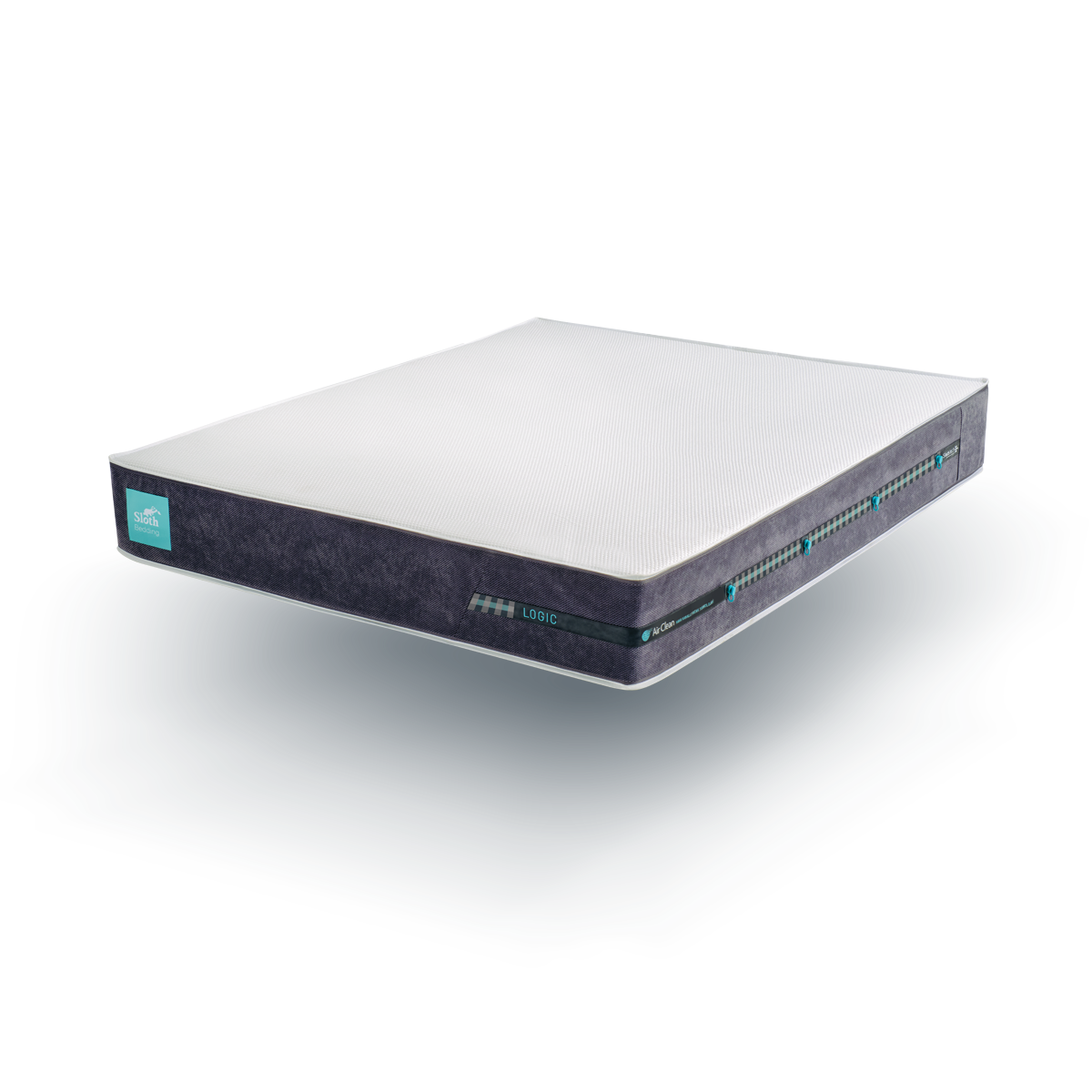
Reboot Air Clean Mattress is designed for those looking for a medium-firm option in an entry-level price range. Connect Air Clean Mattress offers a wider range of firmness. The Code Air Clean Mattress and Logic Air Clean Mattress provide more support for heavier users with their high-density foam layers.
A 100-day trial period and free shipping come standard with all models. This period is a sufficient time frame to test your firmness preference under real sleep conditions.
The right pillow choice is just as decisive as firmness selection. For neck support, the Slothy Neck Care Visco Orthopedic Neck Pillow can be an option that complements your mattress choice.
Frequently Asked Questions
Should mattress firmness be changed as weight increases?
If weight change exceeds 10 kg, mattress support should be re-evaluated. If lower back or shoulder pain has started on your current mattress, this can be considered a signal.
Is a soft mattress always correct for a side sleeper?
No, it depends on weight. For a side sleeper over 90 kg, a mattress that is too soft causes excessive sinking of the hips and spinal deviation. Medium firmness is more functional in this case.
What should be done if the needs of two people differ for a double mattress?
Mattresses that can be separated into different firmness zones are the practical answer to this problem. Alternatively, a top layer (topper) can be added to one side, but it is not a long-term solution.
Does a firm mattress definitely relieve back pain?
No. It depends on the cause of the back pain. If the lower back remains unsupported, pain may decrease on a firm mattress; if it is caused by pressure points, a firm mattress may worsen the situation.
Is mattress material (latex, visco, spring) effective on the feeling of firmness?
Yes. At the same firmness rating, latex feels more reactive and bouncy, while visco slowly hugs the body. Both offer the same firmness score in different ways.
Is the 100-day trial period really enough for a firmness test?
It is. The spine and muscular system adjust to a new mattress in 3-6 weeks. If the pain does not continue or has started within 100 days, this provides concrete data regarding whether the firmness is suitable.
Is the firmness selection for children different from adults?
Yes. Children's muscles and bone structure continue to develop. Medium-firm surfaces are generally recommended. Models specific to children, such as the Logic Kids Air Clean Mattress, are designed with this need in mind.

Share:
Guide to Self-Cleaning Bed Technologies
The 8 Best Mattresses and Duvets for Hot Flashes 2026