


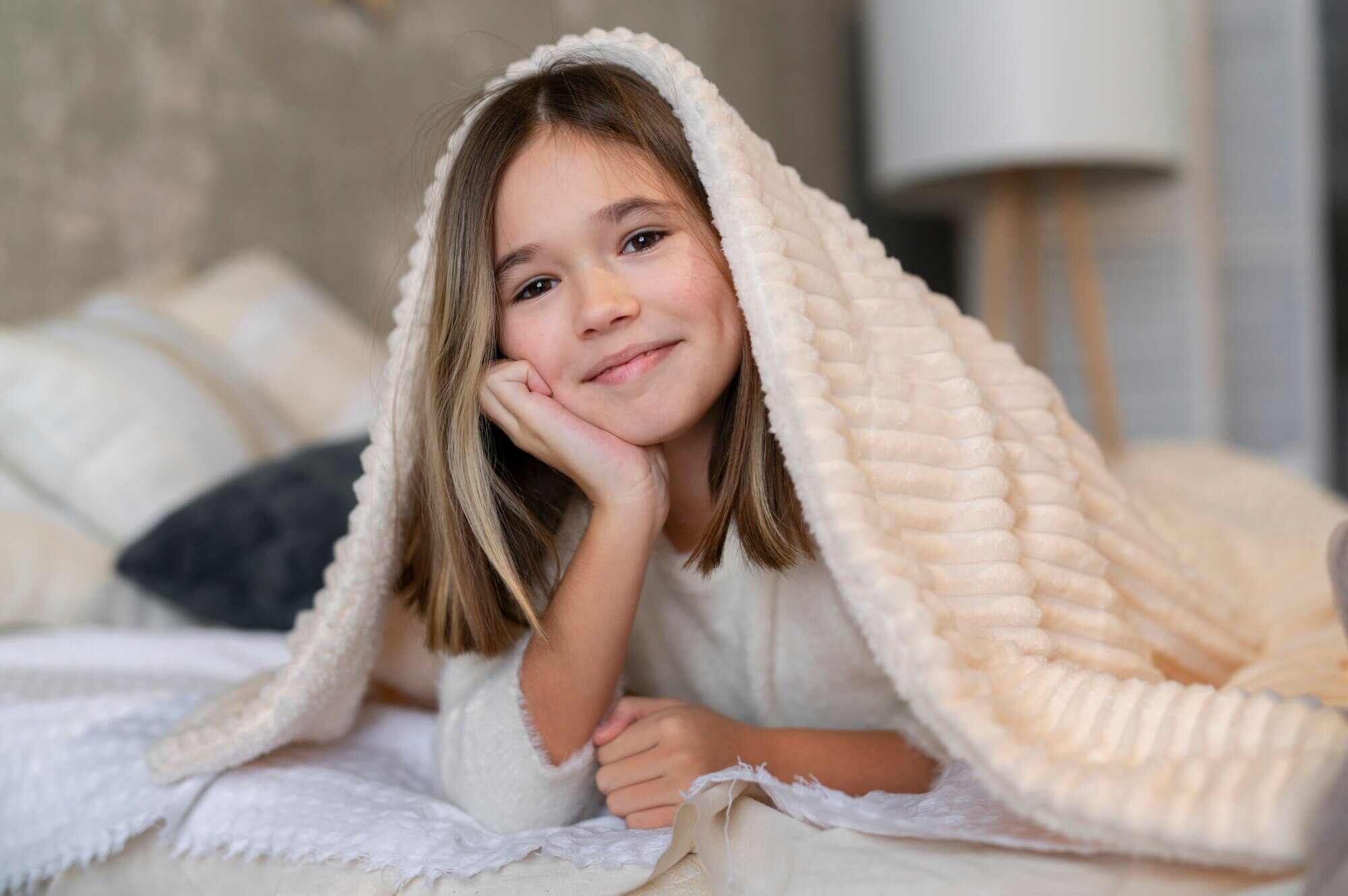
For children, sleep quality is of great importance for the healthy continuation of growth and development processes. One of the most important factors affecting sleep quality is choosing the right blanket. In this guide, we will cover key points such as what to consider when choosing a children's blanket, the features of different blanket types, and selecting a blanket based on age.
Things to Consider When Choosing a Children's Blanket
Choosing the right blanket for children ensures they stay comfortable and safe during sleep. However, when choosing a blanket, one should pay attention to certain criteria not only for comfort but also for safety and health. Here are the important points you should consider when choosing a children's blanket:
- Fabric Selection: Children's blankets are produced from fabrics such as cotton, wool, and fleece. Because cotton is a natural material, it is breathable, allows the skin to breathe, and prevents allergic reactions. While wool blankets provide extra warmth in the winter months, fleece blankets offer practical use due to their lightweight and heat-retaining properties.
- Seasonal Suitability: Attention should be paid to the thickness of the blanket according to the season. While thick blankets that keep you warm are preferred in winter, thin and breathable cotton blankets are more suitable in summer.
- Hypoallergenic Blankets: If your child is allergic, hypoallergenic blankets should be preferred. For children sensitive to dust mites, mold, or chemical substances, blankets made of organic and hypoallergenic materials will be ideal.
- Safety Precautions: Very large and heavy blankets can be dangerous for children. Blankets that may create a risk of suffocation should be avoided, and lightweight models that children can easily kick off should be preferred.
In summary:
- Fabric: Cotton, wool, fleece
- Seasonal Suitability: Thin blankets for summer, thick for winter
- Safety: Lightweight blankets that are not overly large
Best Types of Blankets for Children
Choosing the right blanket for children directly affects their sleep quality. Different types of blankets offer various advantages based on diverse needs. Here are the best types of blankets for children:
- Cotton Blankets: With their natural, breathable, and skin-friendly structure, cotton blankets can be used in both summer and winter months. They are a safe choice, especially for children with a risk of allergies.
- Fleece Blankets: Fleece blankets stand out for their ability to keep you warm in cold weather. Thanks to their lightweight structure, they do not weigh the children down and ensure a comfortable sleep.
- Organic Blankets: Organic blankets are products made from natural materials that do not contain chemical substances. Being environmentally friendly and minimizing the risk of allergies makes organic blankets a healthy option.
Note: Electric blankets are generally not recommended for children. Because temperature control can be difficult, they can lead to overheating and safety issues. For this reason, the use of electric blankets for children is not advised.
Key Points:
- Cotton blankets are a natural, breathable option suitable for all seasons.
- Fleece blankets are lightweight and comfortable blankets that keep you warm in cold weather.
- Organic blankets are a healthy choice that contains no chemicals.
Choosing a Children's Blanket by Age
Choosing a blanket based on a child's age varies in terms of both comfort and safety. It is extremely important for the blanket to be safe and comfortable, especially for infants and young children.
- Newborns: Lightweight and breathable cotton blankets should be preferred for newborns. Excessively thick or heavy blankets can restrict the baby's movement and cause a risk of suffocation.
- Children Aged 1-3: Soft and comfortable options are important for children in this age group. Fleece blankets are popular in this age group because they are lightweight and warm, but they should be light enough for the child to easily kick off the blanket.
- School-Age Children: Larger and more durable blankets can be chosen for school-age children. Cotton or fleece blankets are suitable for this age group in terms of both comfort and durability.
Summary:
- Newborns: Lightweight cotton blankets
- 1-3 Years: Fleece blankets may be preferred
- School Age: Larger and durable cotton or fleece blankets are suitable
Children's Blanket Cleaning and Maintenance
Regular cleaning of children's blankets is extremely important for both hygiene and health. Dust, stains, and allergens can create problems, especially for children with sensitive skin.
- Washing Instructions: Washing instructions on the label of the children's blanket must be followed. Machine-washable blankets provide practicality. Blankets used, especially for allergic children, should be washed frequently to keep them clean.
- Stain Removal: Cleaning stains on the blanket immediately ensures long-term use. Organic cotton blankets should be washed at low temperatures and with gentle detergents.
- Extending the Life of the Blanket: To extend the life of the blankets, correct washing and storage methods should be applied. Airing, regular cleaning, and proper storage conditions ensure that the blanket lasts longer.
Tips:
- Choose machine-washable blankets.
- Wash organic blankets on a gentle cycle and at a low temperature.
- Keep your blankets clean by airing them out regularly.
Children's Blanket Prices and Budget-Friendly Options
When buying a children's blanket, it is important to balance price and quality. It is possible to find both affordable and high-quality blankets. Prices vary depending on the material used, brand, and quality.
- Price Ranges: The prices of children's blankets vary based on fabric quality and brand. While cotton blankets generally offer affordable options, blankets with organic and hypoallergenic features can be in higher price ranges.
- Quality and Price Balance: A quality blanket ensures your child is more comfortable and safe during sleep. If you are looking for blankets that fit your budget, cotton or fleece blankets can be an affordable and durable option.
In Conclusion:
- Cotton blankets are usually affordable and long-lasting.
- Organic and hypoallergenic blankets may be in a higher price range.



Share:
Bed Cleaning and Long-Term Use Tips for Children
How to Improve Sleep Quality?