


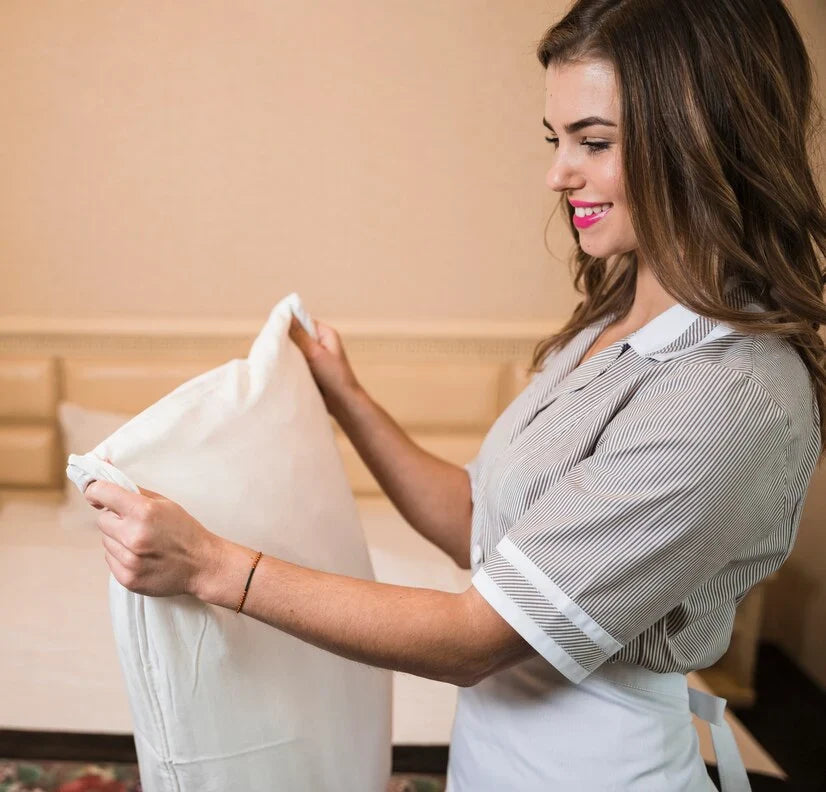
Regular cleaning of pillows is of great importance for both our health and our sleep quality. Over time, pillows become soiled with substances such as sweat, oils, and dead skin cells, which can lead to allergies and sleep problems. So, how should pillows be cleaned? Here is what you need to know about cleaning pillows.
How to Wash or Clean a Pillow?
Washing or cleaning pillows varies depending on the type of pillow. General cleaning steps and cleaning methods according to pillow types are explained in detail below.
What Are the General Cleaning Steps?
- Check Washing Instructions: Be sure to read the washing instructions on your pillow's label. Different types of pillows may require different washing methods.
- Using a Washing Machine: Pillows can generally be washed in a washing machine, but it is important to select the appropriate cycle based on the pillow type.
- Choosing Detergent: Use a gentle, hypoallergenic detergent. Excessive foam can damage the material inside the pillow.
- Drying: Drying the pillow completely is essential to prevent mold and unpleasant odors. You can use a tumble dryer or natural drying methods.
What Are the Cleaning Methods for Different Pillow Types?
Each type of pillow requires different care and cleaning methods. Here are the most common pillow types and cleaning tips:
How to Clean a Fiber Pillow?
- Fiber pillows can generally be washed in a washing machine.
- Washing Cycle: Select the delicate cycle.
- Washing Temperature: Wash between 30-40 degrees.
- Drying: Dry in the tumble dryer on low heat or air dry naturally in the sun.
How to Clean a Cotton Pillow?
-
Cotton pillows can also be washed in a washing machine.
-
Washing Cycle: Select a normal or delicate cycle.
-
Washing Temperature: 40 degrees is ideal.
-
Drying: Dry in the tumble dryer on low heat or by natural means.
How to Clean a Wool Pillow?
- You need to be careful with wool pillows because wool can spoil easily.
- Washing: Wash on the wool cycle or by hand.
- Washing Temperature: Use cold water.
- Drying: Lay flat to dry naturally.
How to Clean a Goose Down Pillow?
- Goose down pillows contain delicate materials and therefore require special care.
- Washing Cycle: Delicate cycle or hand wash.
- Washing Temperature: 30-40 degrees.
- Drying: Dry in the tumble dryer on low heat or lay flat to dry.
How to Clean an Anti-Allergic Pillow?
Anti-allergic pillows can generally be washed in a washing machine.
- Washing Cycle: Delicate or normal cycle.
- Washing Temperature: 40 degrees.
- Drying: Dry in the tumble dryer on low heat.
How to Clean a Visco Pillow?
- Visco pillows should not be machine-washed.
- Cleaning: Wipe with a damp cloth and let it dry thoroughly to allow it to air out.
- Drying: Lay flat to dry without exposing it to direct sunlight.
How to Clean a Yellowed Pillow?
- You can use baking soda and white vinegar to whiten yellowed pillows.
- Washing: Wash on a normal cycle, adding baking soda and vinegar.
- Drying: Dry in a well-ventilated area.
How to Clean a Pillowcase?
- Pillowcases should be washed regularly.
- Washing Cycle: Normal cycle.
- Washing Temperature: 40-60 degrees.
- Drying: Dry in the tumble dryer or by laying flat.
What Are Drying Tips?
- Using a Tumble Dryer: Dry on low heat and add dryer balls.
- Natural Drying Methods: Dry outdoors without exposing directly to sunlight.
What Are the Tricks for Pillow Cleaning?
- Wash pillows at least every 2-3 months.
-
You can delay the soiling of your pillows by using double pillowcases.
-
Load the machine evenly when washing pillows; washing two pillows at a time is a good idea.
-
Be careful not to use fabric softener during washing, as this can ruin the inner filling of the pillows.
What Is the Importance of Regular Pillow Cleaning?
Regular pillow cleaning both extends the life of your pillow and ensures a healthy sleep environment. Clean pillows provide a cleaner sleeping environment by reducing allergens and dust mites. This is important for your overall health and sleep quality.
By regularly applying the methods shared above for pillow cleaning, you can create a hygienic and comfortable sleeping environment. Remember, a healthy sleep is the foundation of a quality life.
Frequently Asked Questions (FAQ)
How often should pillows be washed?
Pillows should be washed at least every 6 months. However, if you have allergies or sweat excessively, it may be beneficial to wash them more frequently.
Can pillows be washed in a washing machine?
Yes, most pillows can be washed in a washing machine. However, it is important to check the washing instructions on each pillow's label.
Does using fabric softener damage pillows?
Yes, using fabric softener can ruin the inner filling of pillows. Therefore, you should avoid using fabric softener during washing.
What is the best method for drying pillows?
It is best to dry pillows in a tumble dryer on low heat. Natural drying methods can also be preferred. Ensure that the pillow is completely dry.
How to clean yellowed pillows?
You can use baking soda and white vinegar to whiten yellowed pillows. This mixture helps remove yellow stains and unpleasant odors from the pillow.
Conclusion
Pillow cleaning is an important part of maintaining your sleep quality and overall health. By applying the correct cleaning methods according to the type of your pillows, you can extend their lifespan and ensure a hygienic sleep environment. Regular cleaning and care both improve pillow performance and prevent the accumulation of allergens and bacteria. By following the tips above regarding pillow cleaning, you can have a healthy and comfortable sleep experience. Remember, quality sleep is the key to a healthy life.



Share:
Firm Mattress Or Soft Mattress?
How to Wash Bedding? How to Clean Bedding?